Embroidery
Logos, monograms and placed motifs stitched directly into the panel or finished garment.
- Bring artwork, target size, placement and thread-colour direction.
Capabilities · Processes and customisation
Customisation is where a brief becomes your brand: the decoration applied to the garment, the branding sewn into it, and the machines and rooms that carry the style from pattern to packed carton. This page lists what is supported and how each option shapes your brief.
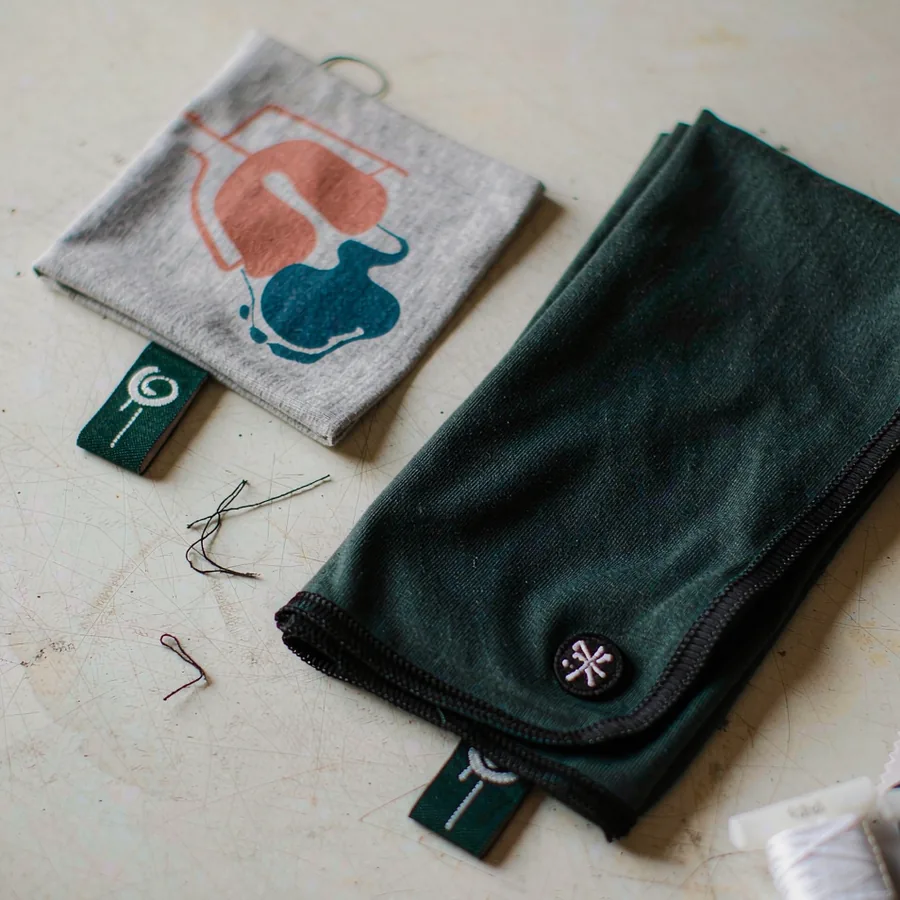
Branding and decoration
Decoration and branding are quoted per option: each one has an artwork requirement, a placement decision and a cost driver. State what you know and mark the rest as open.
Logos, monograms and placed motifs stitched directly into the panel or finished garment.
Printed transfers pressed onto the garment, suited to fine detail and multi-colour artwork.
Plastisol or water-based screen prints for graphic placements across jersey and fleece styles.
Woven or printed neck labels sewn to your brand specification.
Brand hangtags supplied by you or produced to your specification and attached at packing.
Composition and care labels produced to your destination-market requirements.
Sewing equipment
Each machine type maps to a construction decision in your style. Naming the seam and reinforcement expectations in the brief lets the sample room pick the right path first time.
Plain lockstitch machines carry the main construction seams on both knits and wovens.
Coverstitch machines finish hems and necklines where a flat, stretchable seam is needed.
Overlock machines close and edge seams on jersey and fleece bodies.
Button attach machines set buttons on plackets and cuffs at consistent tension.
Buttonhole machines cut and stitch buttonholes matched to the button specification.
Bartack machines reinforce stress points — pocket openings, belt loops, placket ends.
Inside the building
Short sampling windows come from proximity: pattern making, artwork, cutting, sewing, finishing and inspection sit inside one coordinated flow instead of being sub-contracted apart.
Patterns are made and samples are sewn in-house, which is what keeps the sampling window short and revisions tightly looped.
An in-house artwork desk prepares label, hangtag and print files, while merchandisers carry the order between your team and the floor.
A dedicated cutting layer feeds the sewing floor; thread-trimming, pressing and packing close the line before shipment.
Inspection points sit inside the flow — during sewing and before packing — against the approved sample and measurement chart.
Questions before the next step
These answers define the decision boundary for this page. Commercial terms and factory-specific feasibility still require project review.
OEM: you bring the design — a tech pack, reference sample or drawings — and the styles are made to it. ODM: the development starts from your direction and the construction is built out together. Both run through the same sampling and approval steps; the difference is only where the design originates.
List the decoration, label and finishing requirements you already know in the fabric-and-process field, and mark the rest as not confirmed. Each confirmed option becomes a line the quotation prices explicitly.
It can. The published MOQ band runs from 200 to 500 pieces per style, and where a style lands is set by the fabric, the construction and the number of processes. A plain jersey tee sits at the lower end; a multi-process order moves up. The exact figure is confirmed for the style.
From research to a useful brief
You do not need every answer before the first conversation. Share the product direction, available files, quality expectations and known commercial context.