Blog · Buyer knowledge hub

Womenswear sourcing insights.

Practical guides to supplier evaluation, apparel sourcing, product specification and garment quality. Prepare the right questions before your next manufacturing conversation.

Current buyer guides

Guides for your next sourcing decision.

Every article links education to a separate commercial or capability page. General guidance is not presented as proof of HACOLD operations.

Fabric swatch cards, quotation sheets, a calculator and a measuring tape on a sourcing desk. 01

Apparel sourcing in China: a buyer evaluation framework.

A practical sequence for turning product requirements into a comparable supplier review—without treating a quote, sample or factory headline as sufficient evidence.

Sourcing guides · 14–17 minutes
Apparel sourcing in China: a buyer evaluation framework.
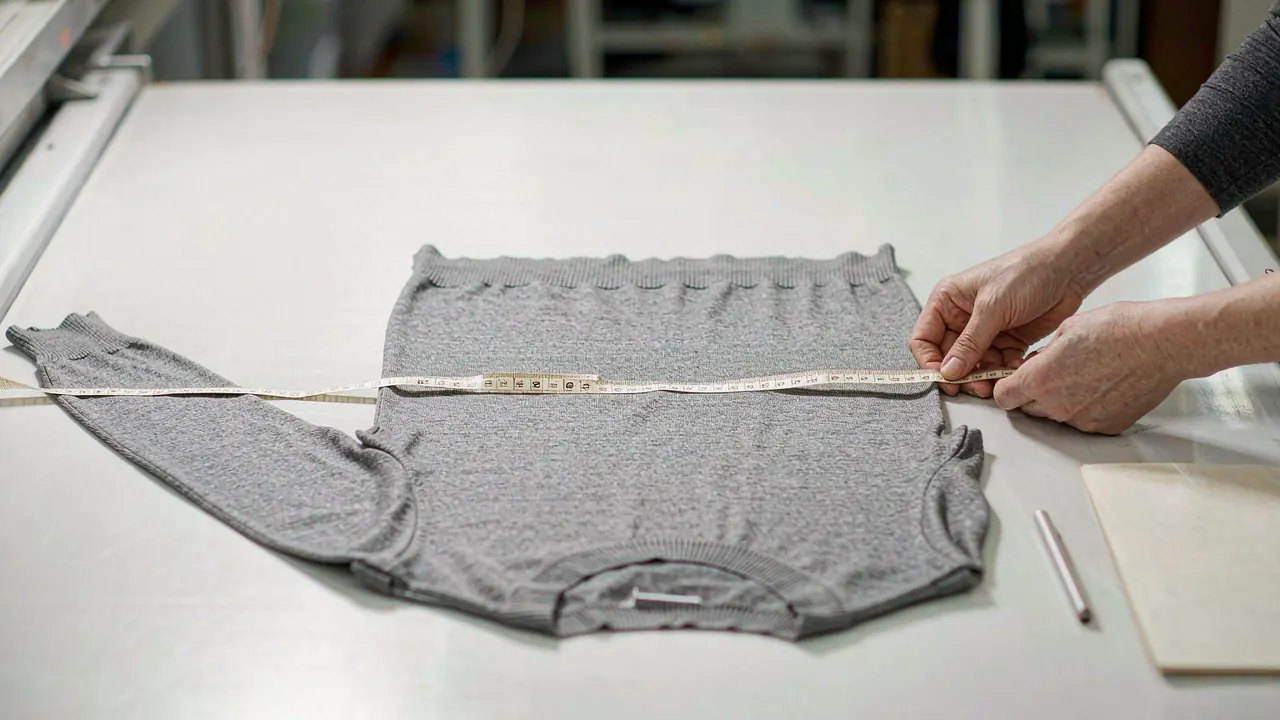
An inspector measuring a finished knit top beside a printed inspection checklist. 02

Garment quality control checklist for buyer approval.

A buyer-side checklist for defining what must be approved, inspected, recorded and escalated before quality becomes a late-stage argument.

Quality & production · 14–18 minutes
Garment quality control checklist for buyer approval.
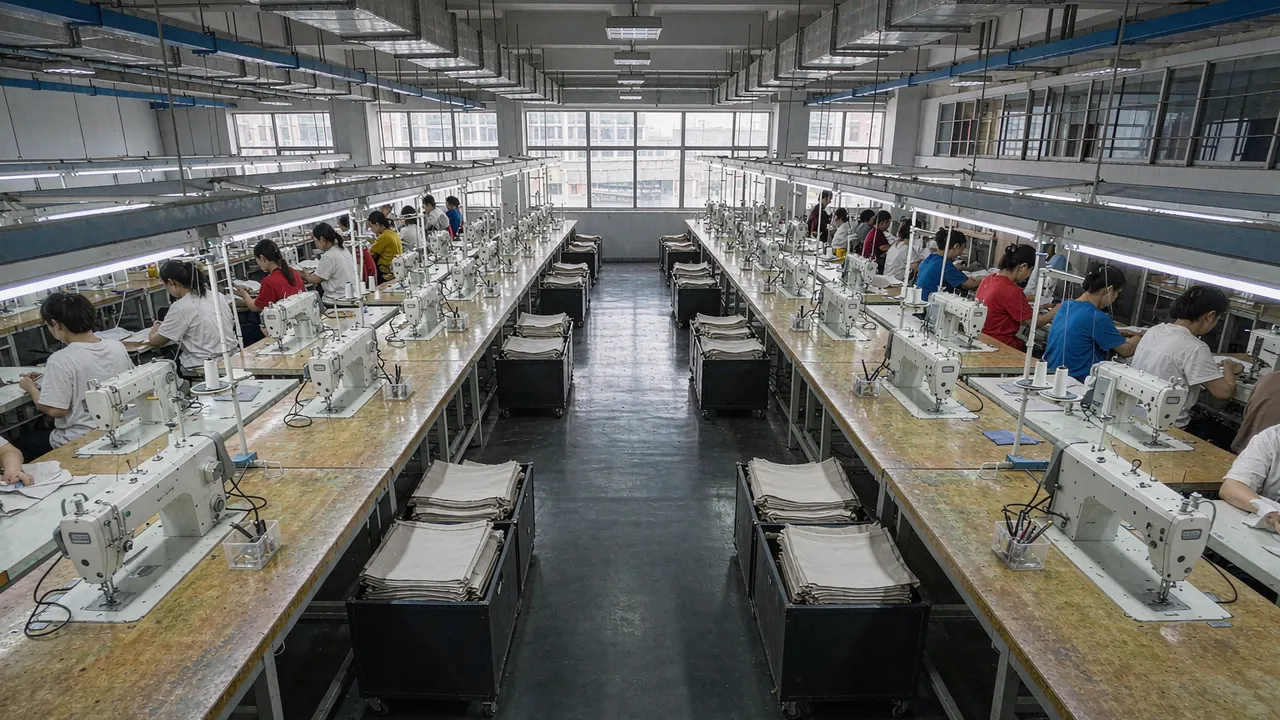
Elevated view down a womenswear production floor with rows of sewing stations. 03

How to find a clothing manufacturer in China.

An evidence-first process for moving from an unclear supplier search to a defensible shortlist, a comparable request and a controlled sample or test-order decision.

Sourcing guides · 15–18 minutes
How to find a clothing manufacturer in China.
An open specification folder beside fabric swatch cards, a measuring tape and a folded white t-shirt on a worktable. 04

Clothing tech pack: what a manufacturer reads before quoting.

What belongs in a tech pack, which inputs only the buyer can decide, and what a factory does with the gaps an incomplete pack leaves open.

Product development · 12–15 minutes
Clothing tech pack: what a manufacturer reads before quoting.
Quotation sheets, a calculator, fabric swatch cards and a fabric-weight gauge arranged on a costing desk. 05

What drives the cost of clothing manufacturing.

Which inputs actually move a garment quotation, why two factories quote the same style differently, and how to read what comes back without treating a headline number as a price.

Cost planning · 13–16 minutes
What drives the cost of clothing manufacturing.
06

China vs Vietnam for clothing manufacturing: how to choose.

A factory-side comparison of the two sourcing systems — what each is genuinely better at, and how to match the country to the product instead of the price.

Sourcing guides · 11–14 minutes
China vs Vietnam for clothing manufacturing: how to choose.
07

Payment terms with a clothing manufacturer: what to expect.

Why deposits exist, what the balance follows, which payment structures carry protection for which side, and how to keep the terms reviewable instead of assumed.

Sourcing guides · 10–13 minutes
Payment terms with a clothing manufacturer: what to expect.
08

Shipping clothing from China: freight, trade terms and timing.

What a trade term actually allocates, how air and sea differ for garments, which documents the order generates, and where shipping time is really lost.

Sourcing guides · 11–14 minutes
Shipping clothing from China: freight, trade terms and timing.
Grouped garment swatches and folded samples arranged by style beside a notebook of quantity columns. 09

Why clothing manufacturers have minimum order quantities.

What a minimum order quantity actually prices, why the same factory quotes a band rather than a number, and how to plan styles, sizes and colours inside it.

Order planning · 9–12 minutes
Why clothing manufacturers have minimum order quantities.
A screen-printed swatch, an embroidery hoop with a partly stitched emblem and two woven labels on a worktable. 11

Screen printing, DTG and embroidery: choosing a decoration method.

How each decoration method is applied, what setup and minimum it carries, where each one fails, and how to match the method to the fabric and the artwork.

Product development · 10–13 minutes
Screen printing, DTG and embroidery: choosing a decoration method.
Folded garments in clear polybags stacked in a brown shipping carton with a blank carton label beside them. 12

Garment packing: the spec that decides how the order arrives.

What a packing instruction fixes, how cartons are built and marked, where packing goes wrong, and why the packing spec is an import document, not a detail.

Quality & production · 8–11 minutes
Garment packing: the spec that decides how the order arrives.
13

Clothing reorder checklist for a new manufacturing quote.

Keep the approved product reference, but rebuild the current order assumptions. Use a change log to separate repeated details from decisions needing fresh confirmation.

Order planning · 5–7 minutes
Clothing reorder checklist for a new manufacturing quote.
Editorial illustration of an ivory T-shirt beside fabric swatches, rib trim, thread and a garment drawing on a warm-grey table. 14

Garment bill of materials: prepare a traceable buying brief.

Connect each fabric, trim and label to a controlled reference. Keep a material description, its quantity basis and its approval state separate before asking for a manufacturing review.

Materials & specification · 6–8 minutes
Garment bill of materials: prepare a traceable buying brief.
Editorial illustration of a T-shirt, fabric and trim references arranged for a garment project discussion. 15

Bring the open decisions to the pre-production meeting.

Connect the current sample, specification and order inputs before discussing bulk production. Turn scattered approvals into one handoff agenda with a reference, an issue owner and a clear next decision.

Sourcing guides · 5–7 minutes
Bring the open decisions to the pre-production meeting.
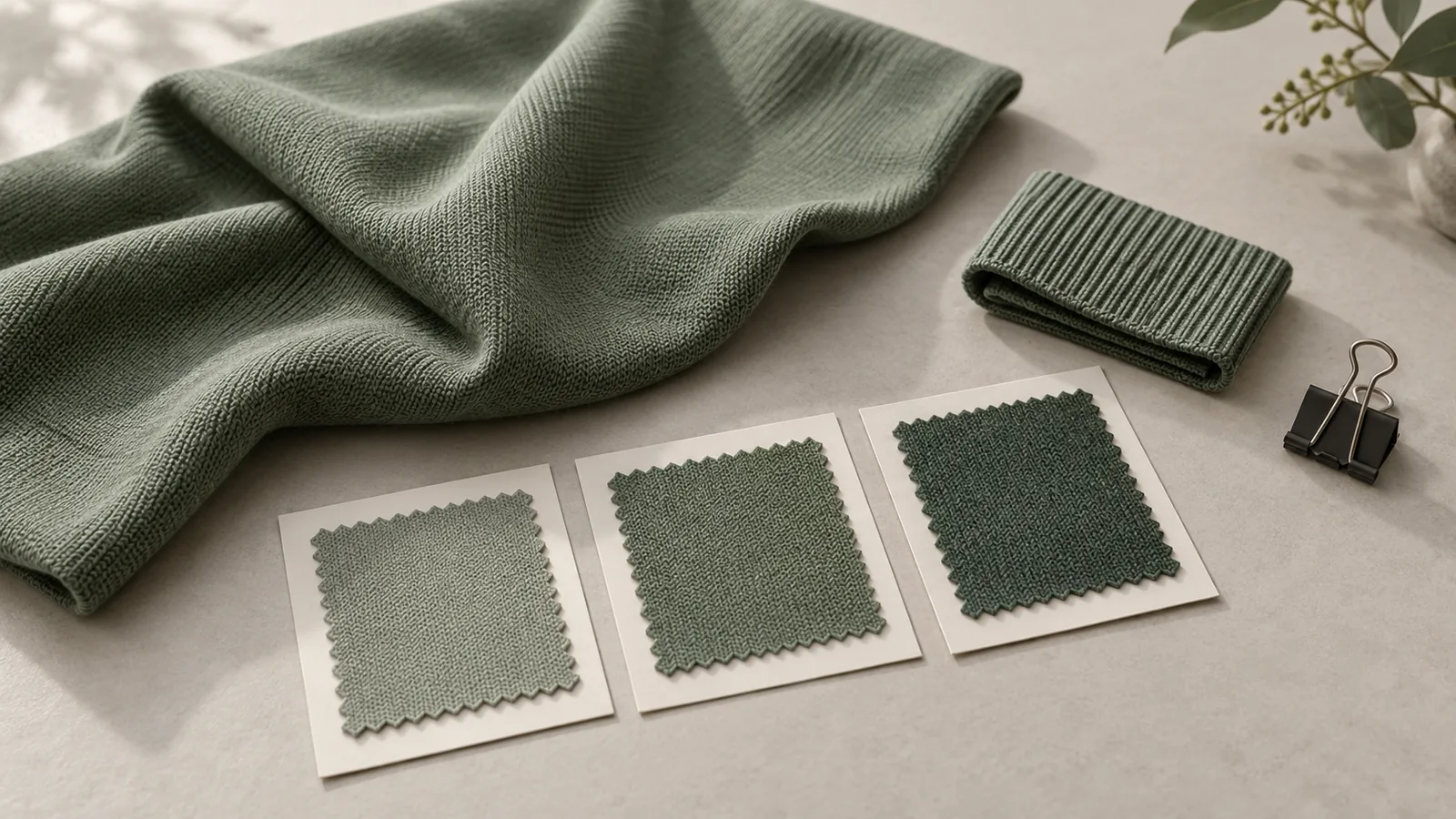
Editorial illustration of fabric swatches, folded rib trim and a larger fabric reference on a table. 16

Make the bulk fabric decision traceable.

Know which material was reviewed, what evidence supports it and what remains open. Use a proposed buyer record before treating an earlier swatch or colour decision as approval of bulk material.

Sourcing guides · 5–7 minutes
Make the bulk fabric decision traceable.
25

French Terry vs Brushed Fleece for Sweatshirts

Compare loopback French terry and brushed fleece for a sweatshirt order. Learn what to request from suppliers, check on samples and approve before bulk.

French Terry vs Brushed Fleece for Sweatshirts
29

T-shirt specifications for a first sample

See a filled tech pack for a cropped raglan tee and use the editable worksheet to prepare the details for a first sample.

T-Shirt Tech Pack Example: HC-S01

Topic paths

Where to go when you are ready to order.

Not every useful topic needs another article today. Capability and company pages already own the next buyer decision.

Product development

Current owners: the tech pack guide covers how a buyer prepares the specification; the sampling capability page explains sample purpose, references and approval records.

Prepare the specification

Quality & production

Current owners: the garment quality checklist and quality capability page divide buyer preparation from supplier-process evaluation.

Review quality decisions

Company updates

Publication rule: no company news is invented. Updates require a real event, approved identity, evidence, date and accountable owner.

Review the company boundary

Project inquiry

Use when: enough product and commercial context exists for a category-specific review.

Request a quote

Editorial control

How these articles are written.

Each guide owns one buyer question, carries a source ledger and hands the later buying decision to a commercial or capability page.

  1. 01

    One primary question

    Every article owns one informational task and names the commercial page that owns the later buying decision.

  2. 02

    Source-to-claim fit

    Official references support only the general point they actually address. They are not endorsements or factory evidence.

  3. 03

    Visible evidence status

    Audience, dates, reading time and evidence boundaries stay explicit instead of being replaced by anonymous authority language.

  4. 04

    Controlled conversion

    Readers can keep researching, evaluate a relevant commercial path or prepare an RFQ once enough context exists.

Ready to move from research?

Send your product direction and the decision you need next.

The RFQ organizes a non-confidential text brief for review before email delivery. Public file upload remains unavailable.

Send an inquiry

Two steps, then review. Text only; no file uploads.

  1. Step 1 of 2 Fit check
  2. Step 2 of 2 Details
01 Project details

Start with five required details. Add your project requirements next, then review before sending.

Choose the closest current category. Construction and supplier fit still require review.

Enter the buyer's working estimate, or “Not confirmed.” This is not an MOQ statement.

Add a website or phone Optional

A link to your brand or company site helps the review start with real context.

Include a number if you would like us to reply by phone or WhatsApp.

Nothing is sent from step 1. The detailed specification comes next.

When you select “Send RFQ”, the text fields are emailed to HACOLD and stored in the private inquiry dashboard for follow-up; short-lived pseudonymous request metadata is used for abuse control. Email and WhatsApp remain available as backup channels. Do not include confidential files until a separate handling method is agreed.