
Case studies · Project records

What a project looks like from brief to shipment.

A case study is only useful if it shows the decisions, not just the outcome. Every record here follows the same shape: where the project started, what was still unclear, what we did about it, and what the buyer held at the end.

Client names are withheld. Named references and full records are shared during the review conversation, subject to the client’s permission.

Get a quote
Small dispatch area with finished womenswear on a rail, folded polybagged garments and a modest group of shipping cartons.
Illustrative dispatch scene — request permission-cleared project records and dated packing evidence during the review conversation.
01 · Starting pointWhat the buyer arrived with
02 · Open decisionsWhat was still unresolved
03 · Work carried outThe steps we took and why
04 · ResultWhat the buyer held at the end

Project records

How three typical projects start.

The starting point changes the work: a tech pack is a feasibility review, reference images are a development project, and an existing sample is a construction and fit problem to solve first.

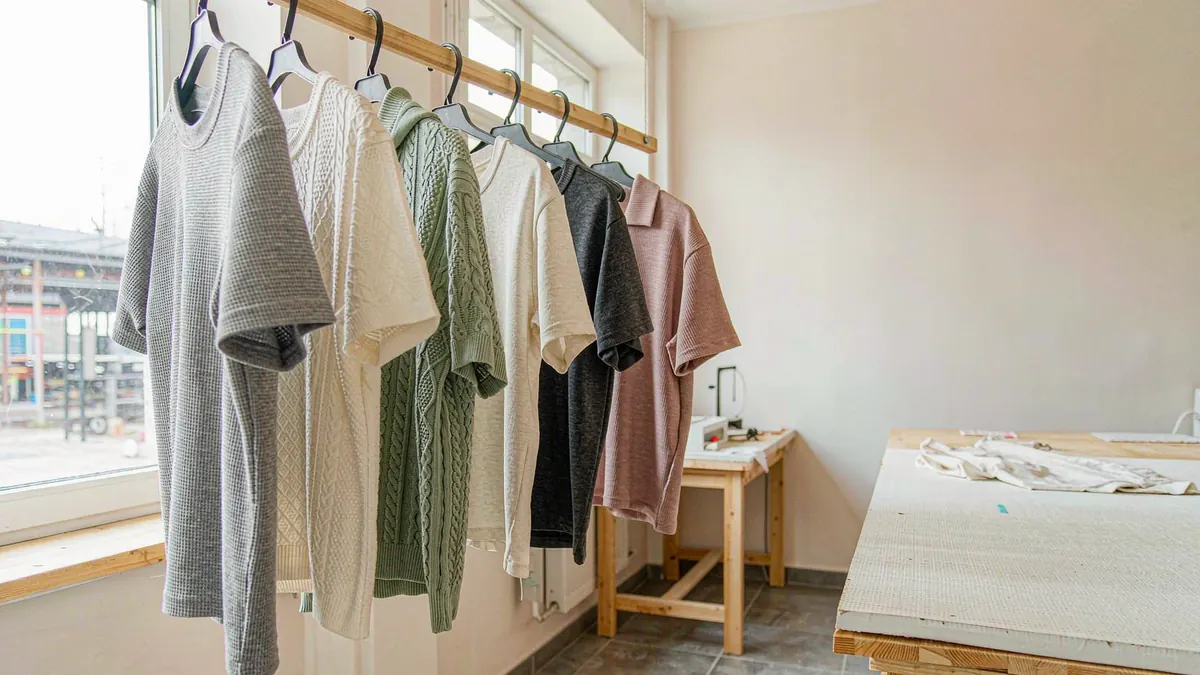
Six knit sample garments in muted tones hanging in a row on a wooden rail in the sample room.
Record 01 · Online womenswear brand

Six-piece jersey capsule built from reference images.

Starting point
Reference images and a written brief
Categories
T-shirts, hoodies, polo shirts
Order shape
Multi-style capsule, small batch per style
Route
ODM development with buyer branding
The situation

A launch date with nothing written down

The brand had a clear direction and a fixed launch window, but no tech pack. Measurements, fabric weight and the neckline construction were all still open, and an earlier quote had been built on assumptions nobody had recorded.

What we did

Development decisions taken in order

  • Pattern and construction developed from the reference images, with the neckline and hood construction settled before anything else
  • Material direction proposed as two jersey weights and one fleece option, all tested on the first sample round
  • Lab dips submitted for the brand’s two core colours before the second round began
  • Print, embroidery and label placement confirmed on the sample instead of being described in writing
Result

The range moved from reference images to an approved bulk order measured against one sealed sample, with a documented materials list the brand could reorder against.
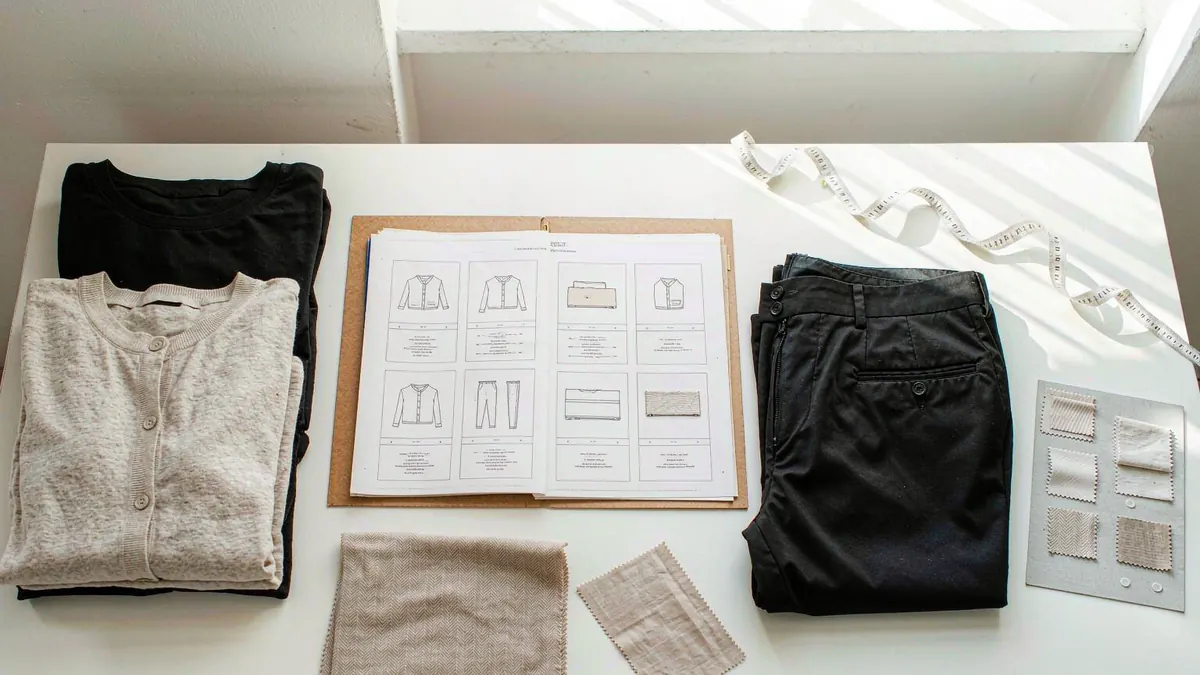
Folded basic garments in neutral tones beside an open specification folder, swatch card and measuring tape.
Record 02 · Retail private label

Basics programme produced to the buyer’s own tech pack.

Starting point
Complete tech pack supplied by the buyer
Categories
T-shirts and trousers
Order shape
Repeat programme across a full size range
Route
OEM to the buyer’s specification
The situation

The specification was complete; the consistency was not

The buyer had already specified the measurement chart, fabric composition, seam types, labels and packing. The risk was never development — two earlier suppliers had delivered garments that measured differently from the same chart.

What we did

Turning a document into a repeatable garment

  • Tech pack reviewed against production reality, with every ambiguous construction point listed and resolved in writing before sampling
  • Pre-production sample approved from bulk material rather than a stand-in, so the measurement set was proven on the fabric that would actually be used
  • Measurement audits run at cutting, in-line and final inspection against the buyer’s own chart
  • Packing, size assortment and carton marks checked against the buyer’s instruction at carton level
Result

The first order shipped to the buyer’s chart, and the sealed measurement set became the baseline every repeat order was produced against.

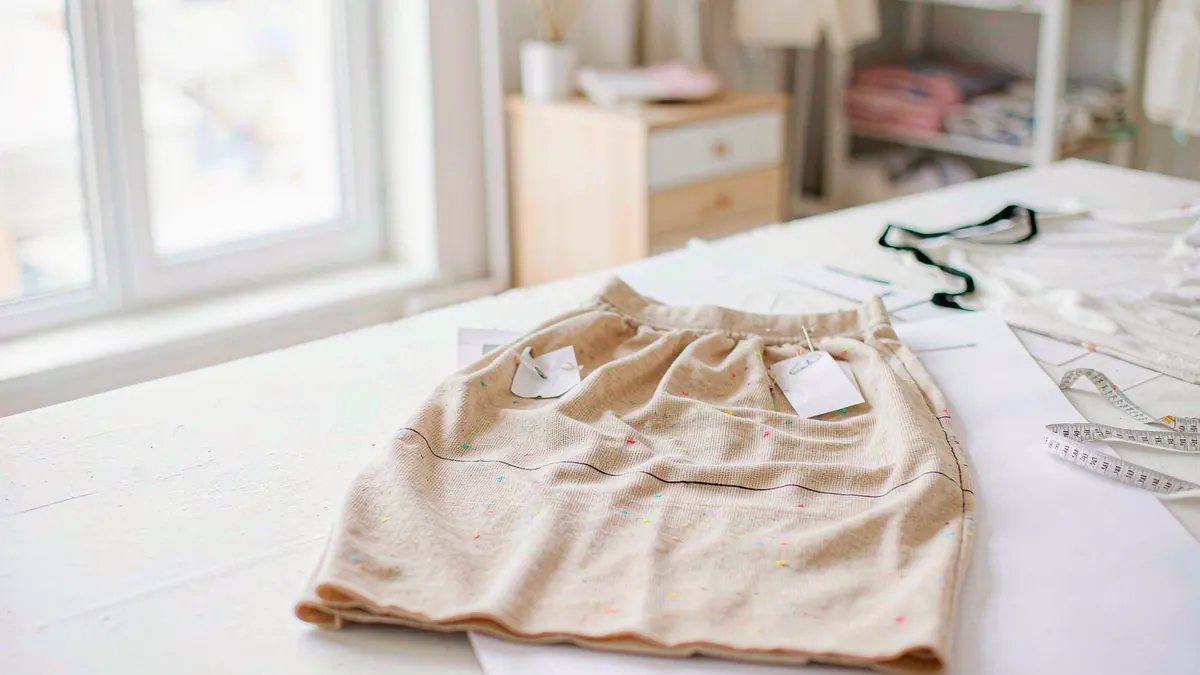
A knit skirt sample pinned with fitting tags on a white table beside pattern paper and a measuring tape during a fit review.
Record 03 · Existing sample

Fit correction and re-development on a sample from another supplier.

Starting point
A physical sample garment
Categories
Skirts and trousers
Order shape
Fit correction, then repeat production
Route
Development from an existing garment
The situation

The look worked; the fit did not

The garment looked right on the hanger but did not fit consistently. The waistband sat differently across sizes and the grading had drifted, so each size behaved like a different style.

What we did

Rebuilding the base before scaling it

  • Sample reverse-patterned and the construction documented piece by piece, including the waistband and the zip insertion
  • Grading rebuilt from the base size rather than scaled from the original, so the fit held across the range
  • One fitting round run on the corrected pattern, with every change recorded against the original sample
  • Corrections applied and re-measured before bulk production was released
Result

The style returned to production on a corrected pattern and a documented construction, and the buyer could reorder it without managing fit complaints again.

These records describe the project patterns HACOLD works on most often. They are written to show how decisions were reached, not to claim a result your own brief would automatically reproduce.

What a record contains

Four parts in every project.

If a supplier cannot show the decisions behind a result, the result cannot be repeated. These are the four parts we keep on every project, and the four parts you should ask any supplier to show you.

01

Brief and starting point

What the buyer arrived with, what was already decided, and which questions were still open when the project started.

02

Material and construction

The fabric, trims and construction decisions taken, including the alternatives that were considered and set aside.

03

Sample and approval history

Each sample round, its purpose, the comments raised and the decision that closed it before the next round started.

04

Inspection and packing

Checkpoint records, findings and corrections on the order, plus the packing and carton evidence at dispatch.

Publication policy

What we publish, and what we leave out.

Case studies are a confidence exercise, and confidence only holds if the same discretion applies to your project afterwards.

01

Client permission first

A project is written up only where the client agrees, and only on the terms they agree to.

02

Confidentiality kept

Designs, material sources, prices and commercial terms stay out. What a record shows is the decision path, not the client’s commercial position.

03

Named references on request

Where a client is willing, a reference conversation is arranged during the review. Where they are not, we say so rather than substitute a logo wall.

Read the IP and confidentiality approach

Where to go next

What these examples mean for your project.

If a project here looks like the brief you are holding, the fastest next step is a specific question rather than a general enquiry.

Products

See the current product categories

Five womenswear categories with the review points that decide fit for each one.

View products
Factory

See how production is organised

Sample room, cutting, sewing operations, quality checkpoints and factory review routes.

View factory
Your project

Put your own brief on the table

Send the category, the files you have and the question blocking your next decision.

Prepare an RFQ

Case study questions

Questions buyers ask about these records.

View all buyer questions
01Why are the client names not shown?

Womenswear development work sits under confidentiality. Publishing a client name, a design or a price without written permission would break the same confidence your own project depends on, so the records describe the decision path instead.

02Can I speak to a reference customer?

Where a client agrees, a reference conversation is arranged during the review. It depends on their permission and their availability, and we will tell you plainly when a reference is not available rather than offer a substitute.

03Are these records typical of the projects you take on?

They are the three project shapes we handle most often: a range built from reference images, a private-label programme produced to a buyer’s tech pack, and a fit correction on an existing sample. Your own brief is assessed on its own terms.

04Do you publish project pricing?

No. Price depends on the fabric, the construction, the process count and the quantity in the order, so a published figure from another project would mislead more than it informs. A quotation basis is prepared for your specific brief.

Start the project conversation

Tell us which of these is closest to your brief.

Send the category, the files you already have and the decision you are trying to make. If your project does not fit any pattern above, that is useful information too.

Send an inquiry

Two steps, then review. Text only; no file uploads.

  1. Step 1 of 2 Fit check
  2. Step 2 of 2 Details
01 Initial fit check

Start with five required details. Add your project requirements next, then review before sending.

Choose the closest current category. Construction and supplier fit still require review.

Enter the buyer's working estimate, or “Not confirmed.” This is not an MOQ statement.

Add a website or phone Optional

A link to your brand or company site helps the review start with real context.

Include a number if you would like us to reply by phone or WhatsApp.

Nothing is sent from step 1. The detailed specification comes next.

When you select “Send RFQ”, the text fields are emailed to HACOLD and stored in the private inquiry dashboard for follow-up; short-lived pseudonymous request metadata is used for abuse control. Email and WhatsApp remain available as backup channels. Do not include confidential files until a separate handling method is agreed.