Fabric sourcing guide · Style HC-S04
Cargo Pants Fabric Guide for Womenswear Brands
Compare two fabrics on the same HC-S04 cargo trouser brief. Record each swatch, sew the same pocket and knee panel, and decide which build to take to quotation.
Two editable comparison tabs and an HC-S04 example.
In this guide
What Fabric Works for Cargo Pants?
Start with cotton twill if you want a cargo leg that holds a defined outline and gives the flap pockets some body. Start with a lightweight woven if you want the volume and folds of a parachute leg. A stretch woven is another option when the knee needs more give in the intended fit. Ask for physical swatches and check each option on the same pocket and knee build before you commit. The fabric has to work both as a wide panel hanging from the waist and as several layers sewn together around the thigh.
Give the supplier a picture of the silhouette you want, along with a short description of how the garment should move. A photograph can show where the fabric gathers and how much volume sits below the knee. The brief should also say whether the flap pockets will carry objects or serve mainly as design details. That choice affects what you need to see from the trial and what the supplier needs to price.
Swipe or scroll to see all columns.
| Design goal | Swatch to request | First check |
|---|---|---|
| Defined utility shape | Cotton or cotton-rich twill | Fold the cloth to the proposed pocket layers. Check edge bulk and how the flap sits. |
| Airy parachute volume | Lightweight woven such as a nylon ripstop proposal | Check opacity, drape and whether the loaded pocket pulls the leg panel. |
| Give at the knee | Stretch woven with direction and recovery information | Check knee movement and the shape after the wearer stands again. |
Cotton Twill for a More Structured Silhouette
Cotton describes fibre content. Twill describes the weave and its diagonal surface pattern. Two cotton twills can give different results because the yarns, weight and finish vary. Handle the actual piece, fold it as it would sit at a pocket opening and check how the layers feel together. A cloth that looks right across the thigh may build more thickness than you want under a flap or where a pocket corner meets a curved seam. CottonWorks on basic woven fabric designs
Lightweight Wovens for a Parachute Silhouette
Ask to see a lightweight woven if the leg is meant to fall into soft folds or gather at the hem. A nylon ripstop proposal is one starting point. Record the fibre content separately from the ripstop construction and look at the grid from normal viewing distance. Check how much of the pocket outline shows through, especially in lighter colourways. If the silhouette needs a quiet matte finish, compare surface reflection and the sound the swatch makes when handled. Make those observations on the actual fabric and repeat them on the assembled garment.
When a Stretch Woven Is Worth Sampling
Consider a stretch woven when the design has a close seat, a shaped knee or another area where the wearer needs more give. Start by asking where the current pattern is expected to pull and in which direction. Compare the two fabrics in the intended cutting direction and ask the supplier for the available stretch and recovery information. If the knee feels restricted on the first sample, review both the cloth and the cut. A change in leg room or seam position can affect what the wearer feels.

What to Request With Each Fabric Swatch
Fabric Article, Composition, Weave, Weight and Finish
Create an entry for each fabric article before reviewing the swatches. Record the supplier and article number, declared fibre percentages, weave, weight in grams per square metre, finish and colour reference. Give each cut piece an ID and mark the face and intended direction. Ask which version the supplier would use for sampling and whether the submitted finish matches that proposal. If the supplier proposes the same article with a different finish or shade, record the change and identify the exact piece your team handled.
Record whether the GSM comes from a declaration or a measurement. When measured weight matters, retain the method and the swatch reference beside the result. The fabric weight and GSM guide explains how to read the figure on a sourcing sheet. ASTM D3776/D3776M covers methods for measuring fabric mass per unit area.
Usable Width, Opacity and Pocketing
Ask for usable width on each body fabric proposal. A wide leg and a pair of cargo pockets require several shapes to fit across that width. Give the supplier the intended size range and ask for the consumption basis used in the quotation. If the pocket bag, flap backing or reinforcement is separate, record its article and intended colour. Ask whether that separate cloth or operation is included in the proposed price. This gives the buyer a way to reconcile a price change when the second fabric uses a different width or pocket construction.
Place both swatches over the same light and dark backing. Repeat the check over the proposed pocketing and behind a folded seam allowance. Look at the fabric flat and while holding it in the way it will sit against the body. Record the shade used in the review and the intended production shade separately. A dark development swatch can tell you about hand and drape. If the production colour is pale, check coverage again when that shade arrives.
How to Compare Two Fabrics on HC-S04
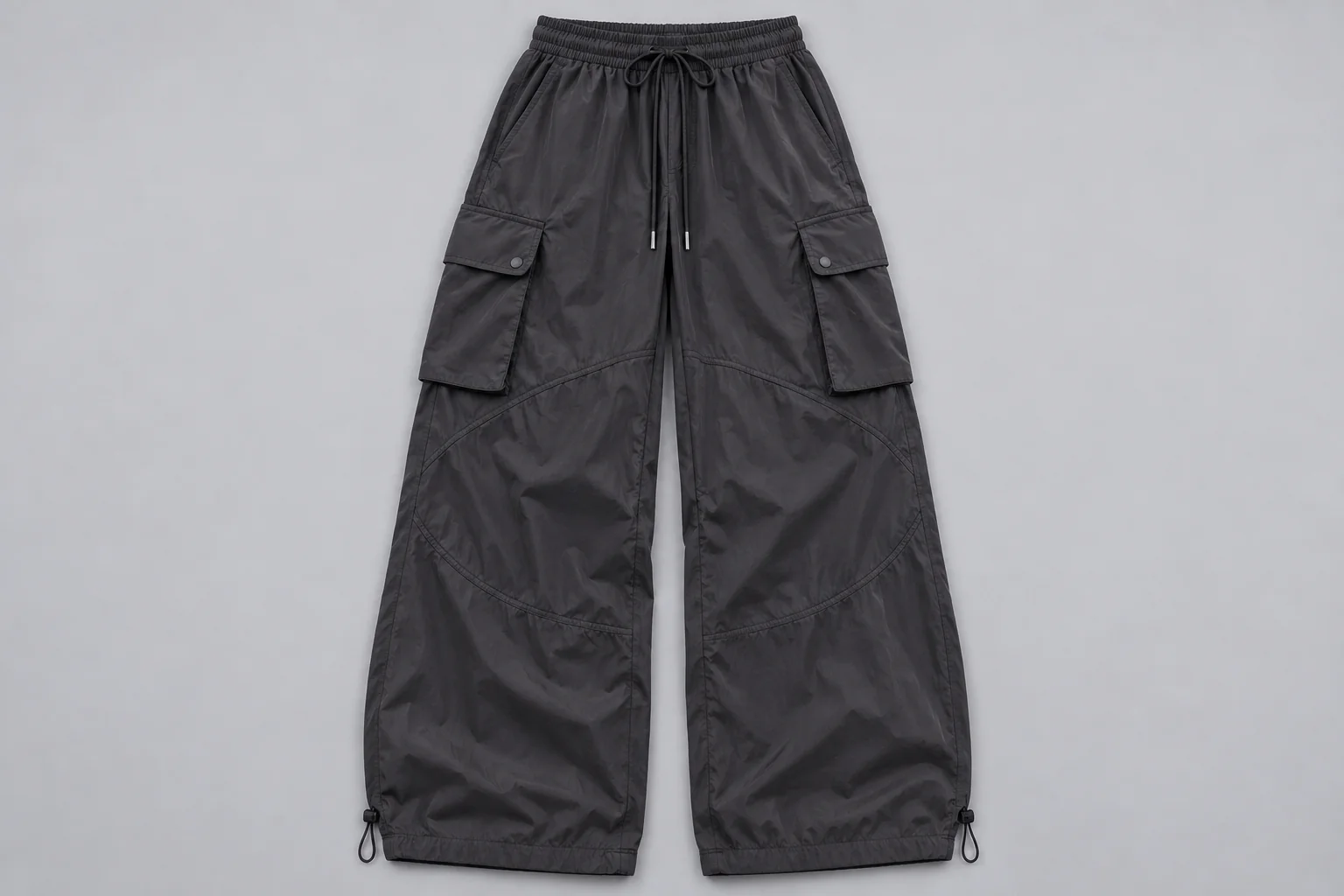
HC-S04 is the style reference for this comparison. Its wide parachute legs, curved knee panels and flap pockets put two fabric decisions on the same garment. The body cloth needs to fall the way the design intends, and the cloth around the pocket needs to carry the proposed layers. Use a cotton twill proposal and a lightweight woven proposal as the two starting points. Confirm the actual cloth from the supplier for each option.
Keep the Base Size, Leg Width and Pocket Placement Consistent
Start with one base size and one pattern revision. Record waist position, rise, leg width, inseam and hem opening. Give both trials the same pocket placement, dimensions, flap and opening. Use one reference for the curved knee seam and waistband. Mark which features must stay fixed in the clothing tech pack so the sample maker can flag changes. If option B needs a different pocket backing or seam allowance, record the baseline build and the proposed adjustment in separate lines.
Keep the first comparison focused on the next decision. A partial leg panel can answer how a pocket corner looks or how the curved seam sews. The waist-to-hem balance, pocket position in wear and ease at the knee need a fit sample. Ask the supplier what each trial will include, then name the piece and revision in the workbook. That way the team can match a photograph, a construction comment or a price to the correct sample.
Sew the Pocket and Curved Knee Before You Choose
Ask for a panel trial in each shortlisted fabric with the intended pocket layers, opening and attachment. Use the same pocket pattern and location in both panels where feasible. Review the flap edge, opening, pocket corners and the appearance of the attachment stitch. Include a section of the curved knee seam below the pocket so you can see whether the seam draws in the panel or changes the nearby pocket line. Photograph both trials in the same light and tag them with the fabric and trial IDs.
Before comparing pocket sag, agree on the object or load that represents the style’s intended use. Review each trial empty and with the same load and support. Note where the flap or opening moves and whether the body panel pulls around the attachment. If the supplier proposes a change, ask which area it addresses. A smaller pocket, a change to the attachment or an additional layer each changes the build in a different way. Carry the chosen adjustment forward with its own revision.

For a panel trial, agree how each piece will be held so that both pockets hang from comparable support. Photograph each loaded pocket from the same angle, then empty it and check the attachment and body panel again. This makes it easier to tell the difference between a pocket that changes shape only while loaded and a panel that still looks distorted after unloading. Carry any concern about pocket access or knee movement into the fitting, where the garment is supported by the wearer.
Check Drape, Pocket Load and Movement on the Fit Sample
Compare the garments on the same fit model or form, with the waist and hem set the same way. Look from the front and side to see how the leg hangs and where the pocket sits. Check the opening while the wearer stands and sits. Ask the fit model to bend the knee and then stand again. Note whether the fabric gathers at the seam, whether the pocket contents change the leg line and whether the hem returns to the intended position.
If both samples pull at the same place, examine the shared pattern, ease or pocket placement before requesting a third fabric. If one trial needs an adjustment, write down which material, part and revision the comment refers to. The product development and sampling guide explains what to agree for the next round.
Keep photos of a pocket-only trial with the notes on that trial. On the fit sample, photograph the entire leg as well as the pocket and knee. The full view shows whether a local change to the pocket solved the problem at the cost of changing the intended volume. If the pocket placement is revised after fitting, put its new reference into the brief before comparing garment prices.
How to Carry the Fabric Decision Into a Quote
Compare the Samples Before and After Agreed Care
Agree on the intended care procedure and record which fabric and garment version you are reviewing. Photograph the same views and compare leg hang, pocket flap alignment, seam appearance and relevant dimensions. If the brand requires formal dimensional-change evidence after home laundering, ask the testing team to choose the applicable method and acceptance limits. AATCC TM150 addresses garment length and width changes after home laundering. Keep a development wash observation and a laboratory result in separate records.
Record the Selected Swatch, Pocket Build and Open Changes
Use the workbook to place the two articles side by side. The Fabric swatches tab records the proposed body cloth, finish, usable width and pocketing. The Pocket trial tab records how the two sewn samples were compared, including the agreed load, pocket opening, curved seam, garment movement and care observations. The HC-S04 example tab shows how to describe the decision and next action. The editable tabs leave project values, review outcomes and approvals open for the team to enter.
Download the fabric and pocket trial sheet XLSX
Swipe or scroll to see all columns.
| Review point | Evidence to record | What the supplier should confirm |
|---|---|---|
| Body cloth and pocketing | Article IDs, usable width, finish and colours | The articles and width used for consumption and price |
| Sewn pocket and knee | Trial revision, agreed load and observations for both options | The pocket build and which changes need a revised trial |
| Finished quote | Preferred sample, size and colour split, plus open decisions | Included operations and any separately priced alternatives |
Choose a next action for each option. A panel with the intended appearance can move to a fit sample. A promising cloth with an unresolved pocket corner can move to a revised sewn trial. An option that changes the leg shape beyond the brief can be set aside. Record the reason and the evidence ID so the buyer can explain the decision when a substitute is proposed later.
Ask each supplier to price the same finished style using the selected swatch or a named alternative, the same revision and the same quantity breakdown. If two options remain open, send both lines with the exact difference. For example, ask for a twill version with the baseline flap pocket and a lightweight version with the proposed backing specified separately. The private-label manufacturing overview helps clarify which party supplies the pattern, material references and approval record.
Frequently Asked Questions
Can Cotton Twill and Ripstop Be Compared at the Same GSM?
Yes. Comparing cloths at a similar weight can help you isolate some of the differences you see in the sample. Record the exact weave, fibre and finish for both. Hold pocket shape and load consistent, then compare drape and seam bulk. A matching GSM tells you the fabrics have comparable mass per unit area. The sewn trials show what matters for the style.
Should the Cargo Pocket and Body Use the Same Fabric?
Use the body cloth for the visible pocket when the design calls for a match, then assess the layers at the opening, flap and corners. A different pocket bag or backing is worth sampling if it addresses bulk, show-through or support. Record the reference for each component and confirm how the supplier has priced it.
What Should I Check if a Lightweight Pocket Sags?
Check the same pocket empty and with the agreed load. Look for pulling at the opening, lower corners and attachment points, then see whether the surrounding leg panel changes shape. Mark where the issue begins. Ask the sample maker to propose a specific adjustment and compare it on a revised piece using the same load.
What Details Do I Need for a Finished Cargo Pants Quote?
Send the style and revision, base size, preferred body fabric and pocketing references, pocket and knee construction, and quantities by colour and size. Include the approved or pending sample decision, trims, labels, packing requirements and price basis. Ask the supplier to list any substitutes, excluded work and open approvals against the exact build they priced.
Start a Women’s Cargo Trouser Sample Brief
Open the women’s trouser gallery and select HC-S04 Parachute Cargo Trousers. Choose Prepare an RFQ for this style to carry the style reference into the inquiry. Add your target leg shape, both fabric articles or the one you prefer, pocket construction, quantity by colour and size, and the decision you need the next sample to settle.