Style HC-S21
What Is Crocking? A Buyer’s Guide for Washed Hoodies
Crocking is color transfer by rubbing. Use the HC-S21 example to request dry and wet results and decide whether a washed black hoodie is ready for bulk.
A matches the shade target but misses the buyer’s wet rubbing limit. B meets both rubbing limits on the shell. Keep bulk on hold until the shade and completed hoodie are reviewed.

In this guide
What Is Crocking?
Crocking is the transfer of color from a textile to another surface when they rub together. A washed black hoodie worn over a light top is one way to picture why this matters. Check where the dark material repeatedly touches the light layer. A controlled rubbing test gives the buyer a way to record how much color transfers to a white test cloth under a specified dry or wet condition. AATCC TM8 public scope
A hoodie can have the worn-in gray highlights the brand wants and still need a transfer check. Set the shade target and the rubbing limits as separate requirements. Keep a physical shade reference for the finished shell and identify the test result needed for each relevant textile. In a garment that combines a washed shell, rib trim and a small graphic, a result for one component describes the tested specimen. Map the other components before deciding which need their own evidence.
| Condition | What the buyer is checking | What to record |
|---|---|---|
| Dry rubbing | Color transfer to a dry test cloth during controlled rubbing. | Specimen ID, dry grade, agreed dry limit and method. |
| Wet rubbing | Color transfer to a test cloth wetted under the specified method. | Specimen ID, wet grade, agreed wet limit and method. |
| Staining during laundering | Staining of another material during the specified laundering test. | Separate laundering method, adjacent material and result. |
Consider what happened when someone first noticed the mark. A dark streak where a cuff rubs a pale sleeve and discoloration on a pale layer after washing give you different starting points. Note the affected surface and the sequence of events. That gives the technical team a reason to request a particular test and a practical way to relate the report to the garment. A report for color change on the dark shell can also be logged separately from staining of an adjacent fabric.
At the first sample review, check whether a mark appeared on another material or whether the dark finish itself looks lighter where the fabric rubbed. Photograph each change separately and record where it occurred. For example, the seam highlights can be intentional, while a gray mark inside the front opening may need investigation. Review the shade against the approved reference and use the corresponding rubbing evidence to assess transfer. A buyer can make one decision about the expected appearance and a second about whether the transferred color stays within the project’s limits.
HC-S21 Worked Example and Blank Crocking Approval Worksheet
HC-S21 is a washed black cropped zip hoodie concept with curved seams and a small shoulder flame graphic. In the example, the buyer requests separate dry and wet checks on comparable shell specimens taken from the two supplier finish trials. The buyer keeps the hoodie components constant where practical and compares the finished garments against a physical shade reference. The table shows example outcomes for the shell to explain how the decision is recorded.
| Record | Sample A | Sample B |
|---|---|---|
| Finish and shade | Matches the intended washed black. | One finishing change. The shade at the pocket seam is still under review. |
| Dry rubbing | Meets the example dry limit for the shell. | Meets the same example dry limit. |
| Wet rubbing | Falls short of the example wet limit. | Meets the example wet limit for the shell. |
| Decision | Keep as the shade reference and hold the finish for bulk. | Continue review. Hold bulk while checking shade, cuff rib and the finished zipper area. |
Use Test request to identify the parts, stage, lab method and buyer limits. In A-B rubbing results, enter observed grades as reported and compare matching specimens for each component. Use Sign-off to record the approved finish, retained sample, covered lots and any retest conditions. The workbook leaves the working fields blank. Review the example separately as a guide to what goes in each field.
Download the blank crocking approval Excel template
Map the Hoodie’s Color-Transfer Checkpoints
Check the Shell, Cuffs and Hem Rib
Mark the broad shell panel where the lab can sample the finished face. Check also where the garment is likely to rub, such as the pocket edge, cuff and hem rib. The front view shows those locations, and the inside view shows where the fabric could rub a light top. On the lab request, name the exact surface to be tested. The outside of the main shell and the inside of a rib band can be different materials or finished surfaces.
For each fabric, note the article, material lot and point in the finishing process. Ask how a submitted cutting, offcut or spare piece was processed. If it represents a material before the garment wash, label that stage and ask the lab and supplier to agree on a representative finished specimen. Keep any cut pieces paired with the finished hoodie reference. That makes it easier to see whether a new test is needed after a fabric, trim or finish change.
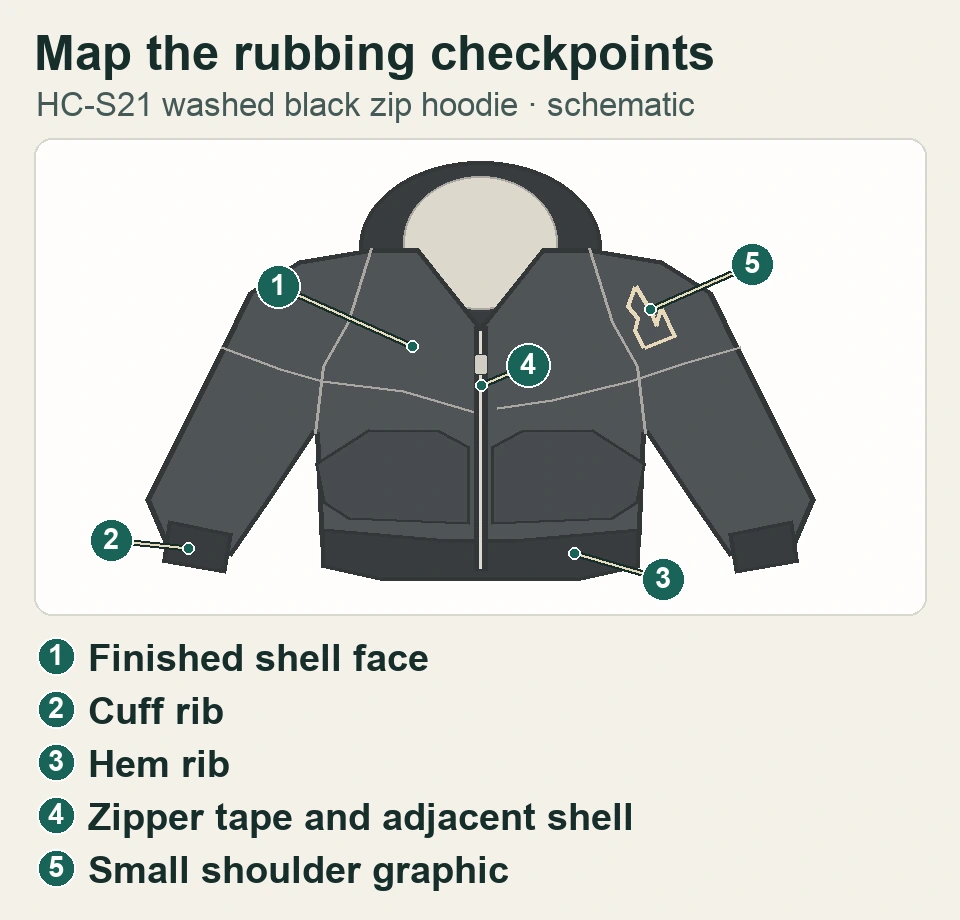
When both options use nominally the same shell, ask the supplier to confirm which lot each sample was cut from. File an extra reference from the current lot if future replenishment will be assessed against it. Check whether the textile face to be rubbed is accessible on the garment and how a separate piece would represent it. A rib offcut can make specimen preparation easier, but its finishing history has to be identified before the buyer uses it to support an approval on the complete hoodie.
Review the Zipper Area and Shoulder Graphic
Inspect the two edges of the center front with the zipper open and closed. Look at the tape where it meets the shell and record any visible mark on a pale adjacent material. Photograph the small shoulder graphic and the exposed fabric beside it under the same light on A and B. If a mark straddles the art and the shell, ask what the lab needs to identify which surface transferred the color. Use the hoodie zipper selection guide for the separate task of specifying the trim and sewn assembly.
Record each observation with a sample ID, location and review condition. For example, “inside left cuff against light layer” gives the production team something it can find on a retained garment. A location map makes those notes easier to share. Include a wide shot to locate the mark and a detail view for comparison. Keep garment handling observations in their own field so the lab report can be traced to the actual specimen it tested.
Request Dry and Wet Crocking Results
Agree on the Test Method and Specimen Stage
Send the lab the proposed standard and ask it to confirm the method, edition and specimen requirements. AATCC TM8 and ISO 105-X12 cover color transfer by rubbing on applicable textiles. If the shoulder graphic is too small to isolate using the standard AATCC crockmeter, ask the lab whether the rotary vertical method described in AATCC TM116 suits the print area. Keep the test area and the specimen preparation on the request. ISO 105-X12 · AATCC TM116
Write the material state in terms the supplier can trace, such as a finished shell from the initial trial or a finished shell from the revised trial. If you want to understand what changes after the consumer care cycle, ask for an additional set of readings at that stage, using the agreed care and sampling conditions. Each dry and wet result needs its own specimen and stage reference. Reconcile them with the retained sample and any finish record before the buyer signs off.
Give each specimen its own label before it leaves the sample room. A shell specimen marked only “black hoodie” becomes difficult to distinguish once a revised finish arrives. Include the style, trial letter, material and lot, and note where the piece came from. If a test is repeated after care, add the care stage to that reference. This keeps the lab request, photographs and approval worksheet consistent when they are handled by different people.
Read the Report Against Separate Dry and Wet Limits
Ask the buyer to state the acceptance criteria in advance for the intended use. The lab report identifies the method and provides grades for the conditions it tested. Enter the reported values as written and compare them with the applicable dry and wet limits. Include the grading scale if the report specifies one. A useful record identifies which surface was rubbed and whether the testing partner recorded direction or a deviation from the requested procedure.
If a cloth photo helps the design team understand the test outcome, label it with the report ID, specimen and dry or wet condition. Base the approval on the corresponding report and the buyer’s criteria. For an in-house visual screen, enter observations in a separate field. Keep a pending status when a lab result is missing or the sample does not match the lot, method or stage on the brief.
Look at how the lab reports multiple readings. If a report gives different directions or separates textile faces, retain the individual entries and show which buyer rule applies to them. Ask the lab to explain any abbreviated notation before the buyer enters a decision. When a report includes a summary alongside the underlying rows, record the row references that support approval. A later reviewer should be able to match a decision to the actual dry or wet specimen result.
Compare Two Finishes and Judge the Complete Sample
Use the original proposed finish for A and one supplier-proposed adjustment for B. Ask the supplier to identify the changed operation and keep the pattern, fabrics, trim and graphic consistent where practical. If a component also changes, list it and identify the new specimen in the comparison. Agree in advance what evidence would help decide whether the adjustment solved the transfer issue without losing the intended shade. Explore garment processes and finishes
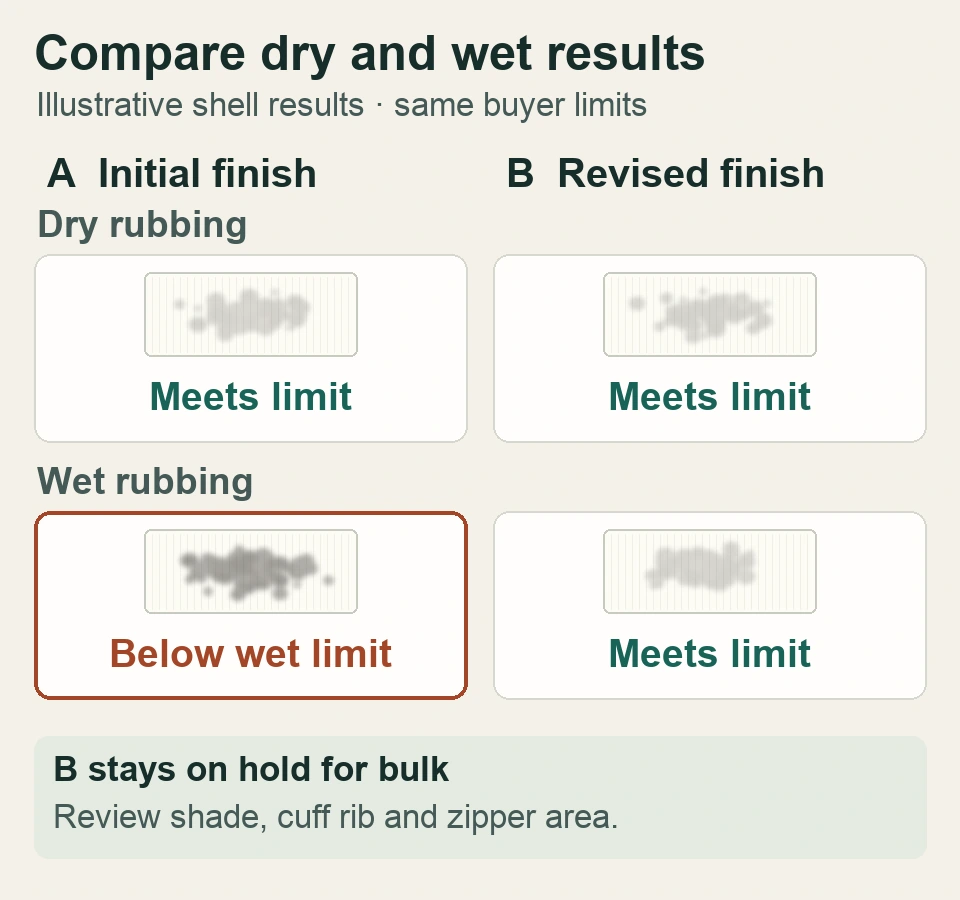
Review the two finished hoodies against the approved reference under agreed light. Check whether the raised seams show the contrast the brand wanted and whether the rib and shell still read as one garment when worn. Open and close the zipper and inspect tape, pocket line and body alignment. Compare dry and wet reports for matched textile zones, then record any additional care or visible staining evidence in a separate line. A buyer can move B into a further sample review while its bulk decision stays open.
If the revised finish clears the shell test but changes a visible area, record the change and decide whether to accept the new look or brief another trial. Preserve the shade reference even if the buyer rejects the original finish. When care checks were requested at more than one stage, use the same photo views to compare the garment before and afterward. Put the test report and the finish identifier beside each observation so a future reviewer can tell which version earned approval.
On the finished garment, record any change in where the front edges or rib bands touch the wearer. If the revised finish changes the way a cuff folds or how the hem rests, repeat the visual contact check on that side. Keep the same photograph landmarks and note which changes are expected. For HC-S21, the useful decision is whether the revised finish keeps the intended seam highlights and fits the rubbing requirements on each requested component. A promising shell result leaves a clear next task when cuffs or the zipper area remain open.
Approve the Lot and Send the Supplier Brief
Tie each approval to the retained garment, finish revision, materials and lots it covers. Record the release stage, reviewer, lab report and follow-up owner for unresolved checks. Ask for a repeat check when a shade, bulk lot, finish route or sensitive component changes enough to affect the prior approval. Add the agreed review points to the broader garment quality control checklist so the initial inspection can verify the released version.
If the brand needs another round, send the supplier the marked photo, source specimen and open decision together. Include the result or approval limit that triggered the review. Putting both the defect and the target on the same brief helps the sample team propose a change it can evaluate. The product development and sampling page describes how to identify the purpose of the next sample and carry its revision forward.
Open the hoodie product gallery, select HC-S21 and choose “Prepare an RFQ for this style.” The style-specific inquiry carries the style code. Include the intended finished shade, components in scope and any buyer test requirements you want the supplier to review.
Frequently Asked Questions
What Is the Difference Between Dry and Wet Crocking?
The two conditions use a dry test cloth and a cloth wetted as specified by the selected method. Both assess transfer caused by rubbing. Ask the lab to report the two values separately and to identify the same textile surface for both. Check each result against the buyer’s limit for that condition.
Does Passing a Rubbing Test Confirm Wash Colorfastness?
A rubbing result describes transfer under the requested rubbing conditions. If the buyer also needs evidence for color change or adjacent fabric staining during laundering, request the appropriate laundry test separately. Record the test method and its acceptance criteria beside the rubbing results so the buyer can approve each requirement explicitly.
Can I Use the Same Method for a Small Print Area?
Show the lab the size and position of the printed area and explain which portion you want to isolate. A small flame or narrow graphic may need a method suited to smaller areas. Ask the lab to confirm the specimen, applicable method and reporting format before you send artwork samples or set a limit.
When Should a New Lot or Finish Be Retested?
Review the agreed retest triggers when the shell lot, color, finish route or an exposed trim changes. Link both the previous and revised references to the approval record. Ask the buyer and lab which affected surfaces they need to verify again, and hold any required approval until the new result is linked to the intended production lot.