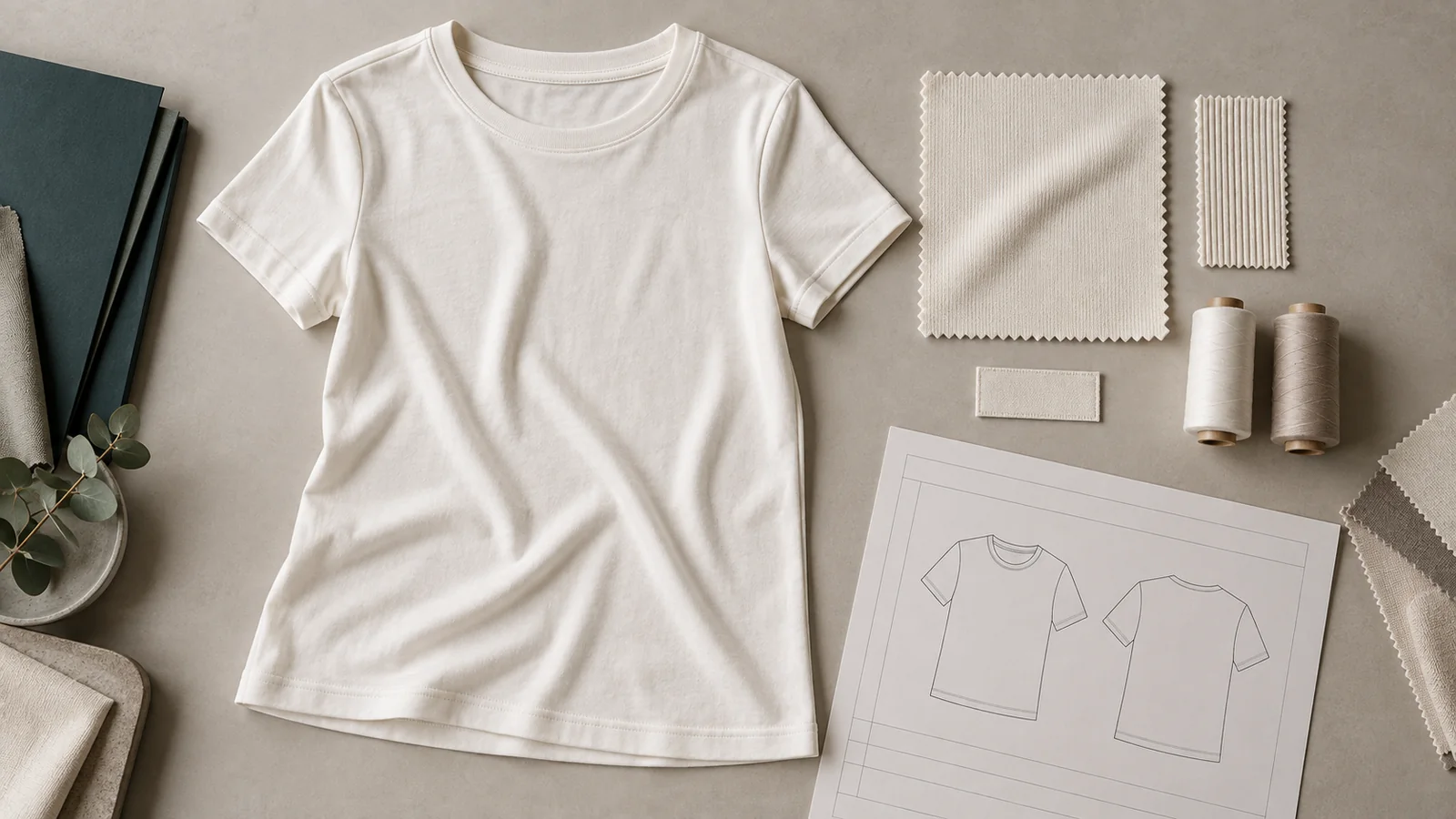
List the components, not just the fabric name.
A garment bill of materials, or BOM, is the component list within the product brief. For this proposed buyer record, that means the fabrics, trims, labels and packing components needed for the identified style. A material name alone leaves the reference, intended use and decision state unclear.
The complete clothing tech pack also covers construction, measurements, artwork and revision history. This page goes deeper into one job: making a component line traceable. It does not replace the full pack, recommend material values or describe a verified HACOLD factory procedure.
- A · Body fabric
- M-01 / swatch FAB-A Composition and finish: to confirm
- B · Neck rib
- M-02 / reference RIB-A Match to body: review pending
- C · Brand label
- M-03 / artwork LABEL-B Placement and content: separate checks
Give every line a stable identity.
Agree a record format with the people who will quote, source and review the material. The fields below are a proposed starting point, not a universal mandatory template.
- Style and revision
- Identify the style, colourway, BOM revision and date. State which tech-pack revision the list belongs to.
- Component and location
- Assign a stable component ID and describe where it is used: body, neck, cuff, waistband, label position or packing layer.
- Controlled reference
- Link the description to the intended article, swatch, trim sample or artwork file. Record the revision of that reference rather than relying on an image in an old message.
- Specification and colour
- Record the agreed material description and applicable characteristics. Identify the colour reference and keep a disputed or unconfirmed requirement visibly open.
- Quantity basis
- Give the unit and whether the value is per garment, per pack or for an order. Separate an initial estimate from a consumption figure that has been technically reviewed.
- Responsibility and status
- Say who supplies or proposes the component, who reviews it, what remains unresolved and which reference the eventual decision covers.
A fictional T-shirt material record.
These invented rows demonstrate the fields, not a complete production BOM. They contain no recommended composition, weight, consumption, supplier or approved manufacturing specification. An incomplete example is not ready for costing or ordering.
M-01 · Body fabric
- Reference
- FAB-A / Cloud / DEMO-TEE revision B
- Supplier response needed
- Identify the proposed article and confirm the description against the reference swatch.
- Quantity basis
- Per-garment consumption and unit: not confirmed.
- Review state
- Open. No fabric substitution or production use approved.
M-02 · Neck rib
- Reference
- RIB-A / intended for neck opening
- Relationship to check
- Review the proposed rib together with FAB-A; visual similarity is not a recorded match.
- Buyer decision
- Confirm the material and colour references after the agreed review.
- Review state
- Pending. Approval of the body fabric does not close this component.
M-03 · Brand label
- Reference
- LABEL-B / artwork revision B
- Location
- Use the placement drawing referenced by the tech pack.
- Separate checks
- Artwork, label construction, placement and any required content review.
- Review state
- Open. This branding row does not establish destination-market labelling compliance.
Use the existing buyer toolkit BOM sheet for your own working record. Add all components actually needed for the style; do not copy these illustrative codes into a supplier instruction.
A number needs its unit and its basis.
Before using a material quantity in a comparison, ask what it measures. A length per garment, a mass per garment and an order-level purchase quantity are different inputs. Write the intended unit beside the value and identify who checked the basis.
- Keep per-garment use separate from order-level material requirements.
- Identify whether an allowance is included and how it was reviewed; do not silently add a generic percentage.
- Check whether sizes or colourways need different component references or quantities.
- Leave unknown consumption visibly unconfirmed rather than entering zero.
The manufacturing-cost guide explains cost inputs. This record does not calculate a garment price or guarantee material availability.
A proposed substitute stays a proposal.
Suppose the original FAB-A reference cannot be supplied and an alternative is offered. Keep the original reference in the record, identify the proposed alternative and ask which characteristics and project assumptions would change.
- Identify the affected component and the reason for the proposal.
- Record the alternative reference, comparison evidence and questions requiring review.
- Ask whether the change affects fit, construction, colour, care, price or the timing plan.
- Record the reviewer, decision, date and exact scope. Update the controlled documents only after the relevant decision is made.
Changing a material name in the spreadsheet is not evidence that the buyer accepted the substitute or that an earlier sample approval still applies.
Separate a quotation input from a material approval.
A supplier may need to quote a proposed component before it is approved. Keep the basis explicit so an estimate is not mistaken for a final material decision.
- Identified reference
- Send the component ID, current reference and intended location. Ask the supplier to state what that quotation includes and which material details remain unconfirmed.
- Supplier proposal needed
- Describe the intended garment and required characteristics. Request an identified material proposal, its quotation basis and the evidence needed for review; do not mark the component approved.
- Substitution or open quantity
- List the affected component and unknown consumption or availability. Ask which price, sample or timing assumptions depend on the answer before comparing quotations.
The useful output is a short open-items list: component, question, responsible person and next decision. A blank consumption field means unknown, not zero cost. The cost guide owns the broader price-driver question.
Send one current material brief.
Issue the BOM with the matching tech-pack revision, the referenced swatches or files and a short list of open questions. Distinguish buyer-supplied material from supplier-proposed material and ask for the responsibilities to be confirmed for the project.
For a short-sleeve style, continue to the T-shirt supplier review; for a hoodie, use the hoodie product brief. The private-label manufacturing page owns the commercial scope discussion. Keep quotation, approval and shipment boundaries in the sourcing terms.
Summarize the garment category, current material-reference status, quantity breakdown and open sourcing questions. The form accepts text only; agree any swatch or document exchange separately.
Discuss a material-based manufacturing briefMaterial-record questions.
Is a BOM the same as a tech pack?
No. In this framework the BOM controls components and their references. The full tech pack also carries construction, measurement, artwork and other product instructions. Link their revisions instead of treating either document as a substitute for the other.
Can the supplier suggest a fabric?
Request a clearly identified proposal against your intended use and requirements. Keep the proposal separate from an approved reference and confirm who reviews each unresolved characteristic. Availability and feasibility still require a project-specific response.
Should different colours use the same row?
Use the format that keeps each colourway's component references unambiguous. If an article, trim or artwork differs, identify that difference rather than hiding it under a shared description.
Does a completed BOM mean bulk production is approved?
No. A component list does not settle fit, construction, inspection, commercial terms or production authorization. Identify the separate decisions and current references before asking for the next step.