Fabric sourcing guide · Style HC-S03
Polo Shirt Fabric: Piqué vs Jersey for Clothing Brands
Compare a textured piqué and a smoother jersey on the same cropped Polo brief. Use the Excel sheet to record what you see in each swatch and what still needs a sewn sample.
Blank two-swatch comparison and an HC-S03 example.
In this guide
Piqué vs Jersey at a Glance
Start with piqué if the surface texture is part of the Polo’s design. Start with single jersey if you want a smoother face and a more T-shirt-like visual direction. Request one actual swatch of each if the decision is still open. Place both against the intended collar and zipper tape before choosing which one to sample. The fabric that looks right in a swatch book can behave differently once a short front panel has to carry a zipper and meet a contrasting band.
For a growing womenswear range, the decision is often about where to spend the next sample round. A textured face might help distinguish a Polo from the brand’s existing tees. A smoother face might let strong colour blocking do more of the visual work. Decide which of those jobs matters most to the range, then choose a fabric that can deliver it on the finished silhouette.
Swipe or scroll to compare all columns.
| Design goal | Swatch to request | Check before sampling |
|---|---|---|
| Visible knit texture | Piqué | Look at the surface beside the collar and across the panel seam. |
| A smooth face under colour blocking | Single jersey | Compare the pale panel’s opacity and drape at the intended fit. |
| A smooth face with more body | Interlock or another proposed double knit | Check the added thickness at the collar join and zipper base. |
Compare Surface Texture, Drape and Opacity
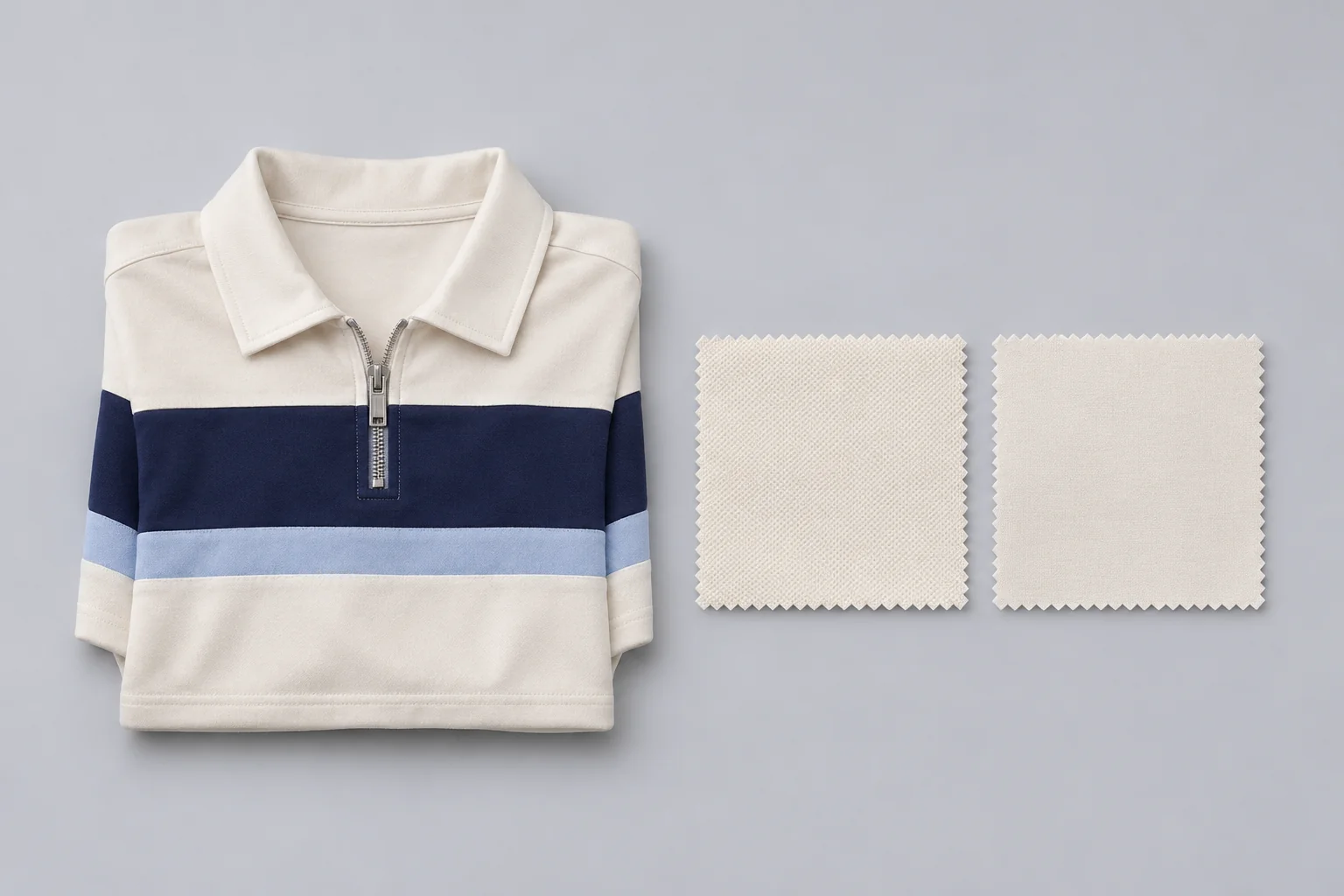
Put the swatches face up under the same lighting. Look from arm’s length first to see whether you can read the texture at normal viewing distance. Then check the face and reverse close up. CottonWorks describes single jersey as a plain knit with distinct face and back sides and shows several piqué constructions in its guide to single and double knits. Ask which side the supplier intends to use as the garment face. Label the face before the cutting team handles the sample.
Hang two similar-sized pieces over the same rounded edge and observe how each folds. Place them over a light and a dark backing under the same light, then repeat the check with the fabric held as it would be on the body. Record how the pale panel looks, including where seam allowances sit behind it. This bench comparison helps you choose what to sample. The fit sample will show whether those differences matter across the bust, shoulder and cropped hem.
When to Ask for an Interlock or Double-Knit Option
Ask for a third swatch if the jersey gives you the look you want but the trial shows that the front needs more body or that the light panel needs more coverage. Interlock is one construction to discuss with the supplier. It is a double knit made with two sets of needles. Define the problem you want the new swatch to solve and judge the proposed fabric against it.
Give the third swatch its own article number and trial record. If the two original options are close, sew the zipper base and collar join in the third fabric before commissioning a full garment. Check the bulk where the panels and zipper tape meet. A body fabric can suit the visual direction yet require a new construction trial before it can go on the same quote.
Ask the supplier to show the swatch from both sides and to note the intended cutting direction. Keep a small piece with the brief so that everyone can refer to the same material at the next review. If the showroom swatch will be replaced by a newly dyed or finished version, keep the old reference and give the replacement its own ID. That way a buyer can tell which surface and shade the team actually reviewed.
Read the Fabric Specification Before You Compare
Separate Knit Structure from Fibre Composition
Ask for the knit structure and fibre percentages as separate fields. Piqué and jersey identify knit structures in this comparison. Cotton, polyester and elastane identify fibres. If two fabric offers differ in both structure and blend, compare them as two specific production options. The resulting differences in hand, appearance or recovery belong to those options. To isolate the effect of the knit, ask whether the supplier can provide alternatives with a closer composition, weight and finish.
If the collection has a fixed fibre requirement, put it in the request before asking for swatches. Ask the supplier to mark any substitute separately and explain which requirement it changes. A short note on why an alternative is on the table gives the buyer and development team a shared basis for review when the samples arrive.
Record GSM, Finish and Swatch ID
Create a separate entry for each supplier fabric article. Record the knit, fibre percentages, declared weight in grams per square metre (GSM), finish, colour reference and swatch ID. Specify which colours share a fabric article. If the ivory, navy and pale blue panels use different fabrics or finishes, record those differences by panel. Include a collar or sleeve finish reference where the supplier proposes a separate material. Use the same identifiers on photos, sample tags, notes and quote requests.
GSM measures mass per unit area. Two swatches with the same declared GSM can look or drape differently. For a measured value, record how and where it was measured, and distinguish the result from the supplier’s declared figure. ASTM D3776/D3776M covers methods for determining fabric mass per unit area. For help interpreting the number on a sourcing sheet, use the guide to fabric weight and GSM.
When a swatch is shown in a substitute colour, identify the actual swatch colour and the target production colour separately. An ivory approval made against an ivory sample carries a different meaning from a texture approval made against a navy substitute. If colour is pending, agree what the next approval piece will be and when the production colour needs to be reviewed.
Put Both Fabrics on the Same HC-S03 Brief
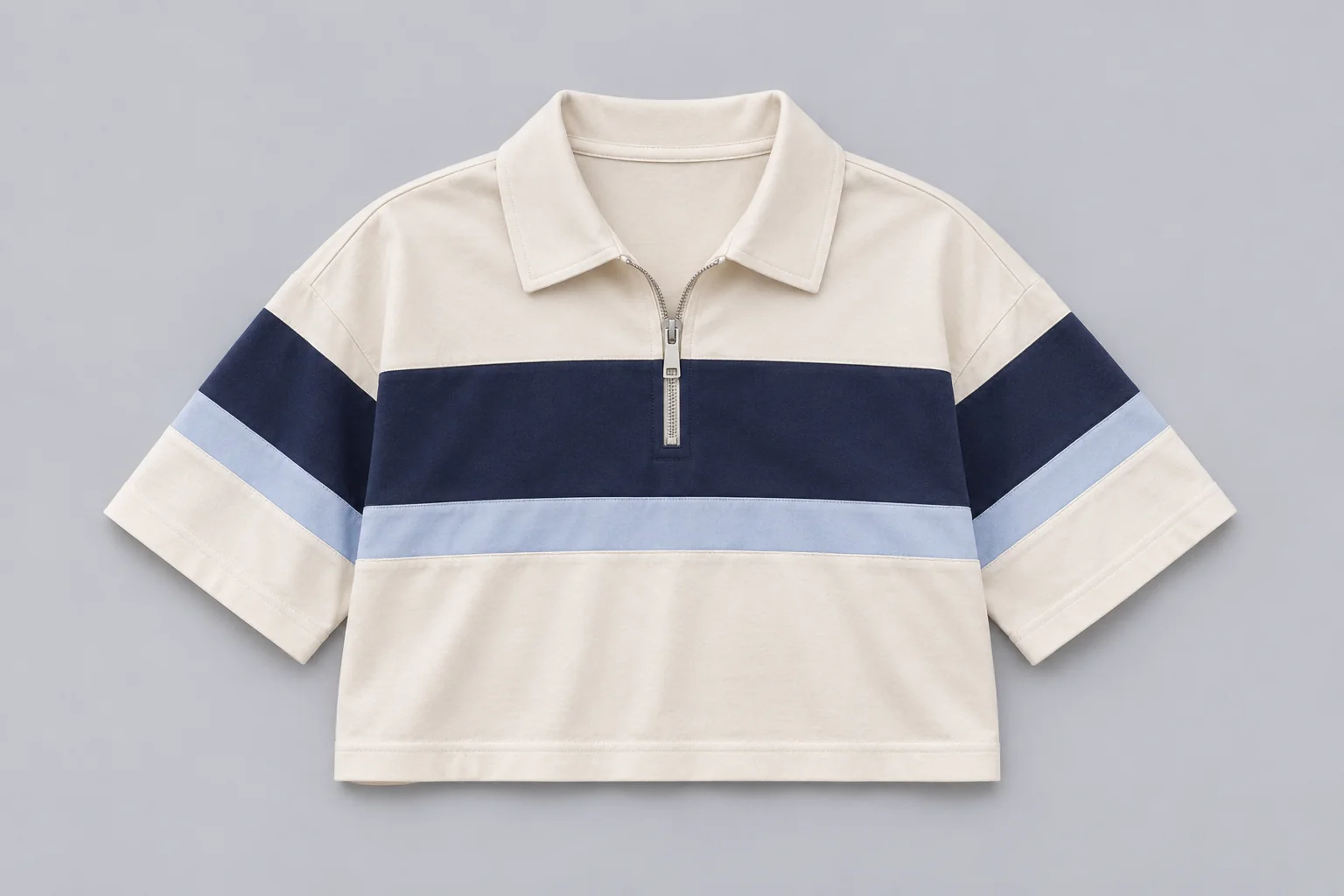
HC-S03 is the style reference for the comparison. It is a boxy cropped Polo with an ivory body, a broad navy band and a narrower pale blue band. Its foldover collar and short front zipper give you two places to check how the fabric handles structure. Use the reference to agree on the look, then use the supplier’s swatches and assembled samples to assess materials and construction.
Hold the Crop, Colour Blocking and Zip Placket Constant
Start both versions with the same base size and pattern revision. Mark the intended crop, sleeve opening and finish, band positions, collar shape and zipper length in the clothing tech pack. Give the supplier the same placement and colour direction for both options. If artwork is planned, keep its size, placement and proposed process consistent for the initial comparison. Ask for a trial on each fabric where the surface or stability could affect the result. The print and embroidery methods guide explains what to specify for different applications.
Decide which changes are part of the experiment. If the jersey needs a different stabiliser under the zipper, record the proposed stabiliser separately and ask the supplier to sew the affected area. Use the same approach if a heavier collar or a different sleeve finish is suggested for the piqué. Ask which trim or operation changes the quote and which assembled piece needs another review. A shared base brief makes it easier to see the consequences of changing the fabric.
Compare Collar Lay, Placket Alignment and Garment Movement
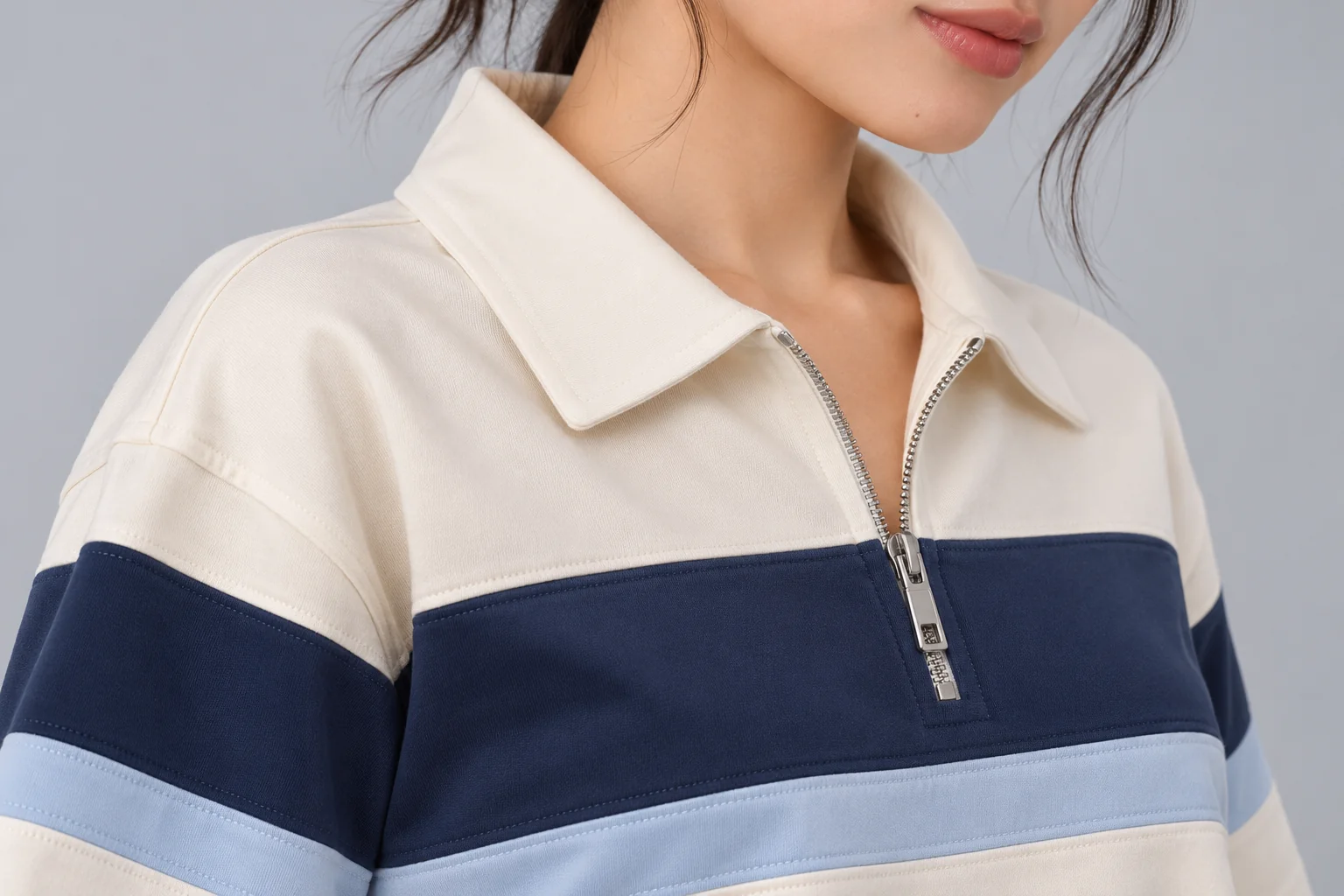
Photograph each version flat with the zipper closed, then repeat with it open. Check whether the collar points sit evenly, whether the zipper tape pulls on either side and whether the bands align across the front. Look at the base of the zipper where the tape, seam allowances and front panel come together. Use the same angle and lighting in both photos. Give each photo the sample ID so that a later revision can be checked against the right record.
Compare both garments on the same fit model or form. Ask the fit model to reach forward and raise their arms. Note how the crop moves, where the front pulls and whether the collar returns to its intended position. Check opacity again on the body, especially across the ivory panel and where the contrast seam allowances sit behind it. If both samples show the same issue in the same place, review the shared pattern or construction before requesting another swatch. The product development and sampling page explains how to organise the next sample round.
Decide Which Sample to Take to Quotation
Record the Before-and-After Care Review
Agree on the intended care instructions and the review procedure before washing either sample. Identify the garment, fabric article and revision. Photograph the same views and record the same garment measurements before and after care. On the HC-S03 brief, include body length, the alignment of the contrast bands, collar appearance and the zipper area. Note any visible colour transfer onto the ivory panel. Keep dimensional change, colour and trim observations in separate rows so a reviewer can see which issue needs a response.
If formal measurement data is required, ask the buyer’s testing team or lab to confirm the method, applicable fabric scope and acceptance limits. AATCC TM150 addresses garment dimensional change after home laundering and flags that it may be unsuitable for some stretch fabrics. Keep a development wash observation and a lab result under their own references. Set any production acceptance limits with the project team and attach the agreed evidence to the relevant revision.
Compare Two Swatches on One Quote Card
Use one comparison card with an option A and option B. Start with the supplier article and swatch IDs. Enter declared composition, GSM, finish and colour. Add sample observations for drape, opacity, the collar and the placket. Where the result is still pending, state what you need to see and who will review it. The Excel template has a blank comparison tab and an HC-S03 example that shows how to describe a pending decision.
Download the swatch comparison XLSX
Swipe or scroll to compare all columns.
| Review point | A · Piqué | B · Jersey | Next action |
|---|---|---|---|
| Fabric identity | Request article ID, composition, GSM and finish. | Request article ID, composition, GSM and finish. | Label both swatches and their intended faces. |
| Design aim | Evaluate whether texture reads across the colour blocks. | Evaluate whether a smooth face shows the colour blocks clearly. | Compare in the intended light and dark shades. |
| Construction trial | Review the collar join and zipper base. | Review the placket and record any proposed stabiliser. | Review each proposal on its own sewn piece. |
| Care and sign-off | Pending sample evidence. | Pending sample evidence. | Assign reviewer and agree the next approval step. |
Carry the preferred option into the quote with the swatch ID, garment sample revision and quantity by colour and size. Ask for the same collar, zipper, labels, decoration, packaging and quote basis across suppliers. If a fabric or trim change is still open, request the proposed construction as a separate priced option. Confirm which colour or garment sample remains to be approved and which costs are included. The two prices are comparable when each supplier has priced the same finished garment and any differences are listed.
A useful line in the quote notes would read “Option A piqué body with the original zip and collar. Ivory shade approval and zipper trial pending.” If the buyer needs a price for option B as well, give it its own line with the proposed trim change and ask the supplier to identify the cost difference. Use the same quantity breakdown for both lines so the team can see the cost of the fabric and construction change.
Frequently Asked Questions
Is Piqué a Knit Structure or a Fibre?
In this Polo comparison, piqué refers to the knit construction and the textured surface it can create. The supplier should state the actual fibre content separately, ideally with the percentages for each fibre. Ask for the fabric article number and intended face as well. Those details help you identify the same fabric when you move from the swatch to a sample or supplier quote.
Can Two Polo Fabrics with the Same GSM Behave Differently?
Yes. The same mass per unit area can come from fabrics with different yarns, knit structures and finishes. Compare two labeled swatches under the same light and check how they hang, how much of the backing shows through and what happens around the placket. Where coverage or shape matters to the style, confirm your observation on the assembled garment.
Can I Keep the Same Collar and Placket When I Change the Body Fabric?
Use the same collar and placket as your first trial if the supplier can make both options to that brief. Compare the sewn join, the collar points and the zipper base. If one body fabric needs a different backing or trim, record the change, ask for a sample of the affected assembly and confirm how the change is priced.
What Should I Send for a Comparable Polo Quote?
Send the style and tech pack revision, fabric article and swatch reference, intended colours and quantities by colour and size. Include the collar and zipper specifications, artwork and labels where applicable, packaging and the requested price basis. Name any approvals that are pending and ask each supplier to identify substitutions, exclusions and sample costs separately.
Choose a Polo Style for Your Sample Brief
If the cropped zip-placket direction fits your range, open the Polo style gallery and select HC-S03. Then choose Prepare an RFQ for this style. The enquiry carries the HC-S03 reference into the project brief. In your notes, include the preferred fabric or both options if you are still comparing, the swatch IDs you have, the colour and size quantities, and the decision you want to make in the next sample round.
Find HC-S03 in the Polo style gallery
If the style is one part of a broader range, the private-label manufacturing overview sets out the information to prepare for the rest of the collection.