Buyer worksheet · Style HC-S01
T-Shirt Tech Pack Example: HC-S01
See how to brief a cropped raglan tee for a first sample. The editable worksheet pairs the filled example with a blank column for your style.
Filled example
HC-S01 · V01- Sample stage
- First fit and material review
- Fit & construction
- Fitted, cropped body with short raglan sleeves
- Colour layout
- Charcoal body, ice-blue sleeves, pale neckline
- Artwork
- Chest graphic reference. Final size and placement open.
- Open before approval
- Fibre blend, GSM, base size, finished measurements and tolerances

In this guide
What to put in a simple T-shirt tech pack
Keep the pack short enough for the buyer and supplier to work from the same revision. Each item below either defines the garment or identifies a decision that needs a response. Use a style identifier on every page or tab so that an image or measurement sheet cannot be mistaken for another style when forwarded on its own.
Scroll the table to see all three columns.
| Pack section | What to send | What the supplier should confirm |
|---|---|---|
| Style and revision | Style code, intended fit, base size and development stage | Which files and revision govern the quote or sample |
| Front and back views | Silhouette, seam lines, panel colours, neckline and hem treatment | Which details require a separate construction sketch or physical reference |
| Materials and components | Body, sleeves, binding, thread, artwork and label references | Availability, substitution options and which samples will use which material |
| Finished measurements | Points of measure, method, units, targets and tolerances when agreed | Missing measurements, ambiguous points and what needs a fit decision |
| Artwork and labelling | Artwork revision, placement reference, colour direction and label responsibilities | Decoration method, trial scope and approved placement reference |
| Quantity and approval | Quantities by style, colour and size; requested timing and next approval | Quote basis, sample scope, outstanding decisions and exclusions |
The table is a buyer tool. A pack for comparing quotations can carry open decisions; a pack used to approve bulk should point to the approved references and confirm who accepted each material change. The general clothing tech-pack guide explains the document’s wider role across garment categories.
Turn the HC-S01 concept into a sample brief
Start with the silhouette and the visible seams
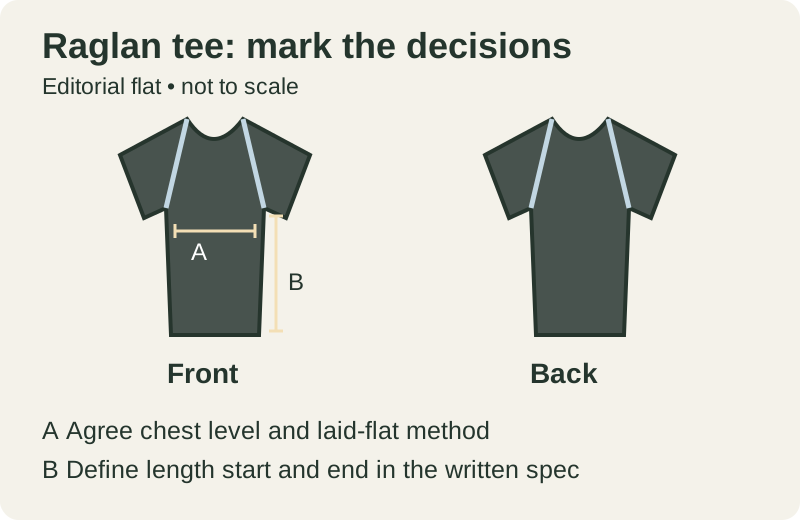
For this hypothetical brief, write “fitted cropped raglan tee” and attach a front and back drawing. In a raglan design, draw where the sleeve panel joins the body up toward the neckline. A photo alone may hide where that seam starts and finishes behind the shoulder. Mark the short sleeve hem, crop line and contrast areas that must be visible on the completed sample. If a buyer has a physical reference, identify it separately from the sketch and say which aspects to follow.
The source image shows a charcoal body, pale blue sleeves, a pale neckline edge and a small light graphic. The first sample does not need to establish all of those decisions at once. For instance, a brand might lock the panel layout and fitted silhouette while asking the supplier to propose two neckline constructions. Ask for both proposals against the intended fabric so the evaluation is about the assembled tee, not a swatch or a rendering.
Separate the finished measurement from its method
A chest target needs a named point, a unit and a measuring path. For a fitted stretch knit, also state whether the garment is laid flat without stretching. Use the same sample preparation and measuring state when comparing two versions. If one person measures below the sleeve join and another chooses a different horizontal level, they can get different results without either garment changing.
Agree how body length is taken, including whether it starts at a defined neck point and where it ends at the hem. For a raglan sleeve, spell out the start point rather than borrowing a set-in sleeve measurement by name. Record the location of the chest line, sleeve opening and neckline measurement so the reviewer can reproduce them. Keep the body size chart separate from the finished garment chart: the intended fit may need a different amount of ease for a fitted crop than for a relaxed tee.
ISO 18890 describes where and how to measure garments and allows buyers and suppliers to agree on additional points. Record the agreed measurement methods in the pack and mark any open targets, tolerances or grading rules for fit review. Set those values for your own design once you have assessed the base fit. ISO 18890 overview
Build the material and artwork record
Identify the body, sleeves and neckline separately
Write a distinct line for the body material, the contrast sleeve material and the neck finish. For each, include the approved article or swatch identifier when available, the knit structure and fibre direction if known, the colour reference and the finish. If matching fabric is proposed in two colours, note that as a proposal, not an approved substitution. A different material at the sleeve or neck should be reviewed where it meets the body, including the seam appearance and response after care.
GSM means grams per square metre and expresses fabric mass per unit area. Brief it alongside the structure, hand, stretch and opacity you need. Confirm GSM and fibre percentages from the proposed material and record the values against its swatch. ASTM D3776/D3776M · HACOLD fabric weight guide
Give the artwork a placement reference
For the chest graphic, include the editable artwork, its revision, a target size if agreed and a placement reference the sample team can locate. State whether the graphic is centred on the finished front, aligned to a seam or deliberately offset. A buyer can ask to confirm the distance from a named point on the neckline rather than saying “put it about here” on a photo.
If two print methods are being considered, ask what the supplier recommends on the selected material and why, then review a trial on the actual fabric and colour before accepting it. The picture in this guide is not artwork approval or proof that a particular method works on the final material. Assign responsibility for label copy, placement and packing files, and keep those decisions visible in the bill of materials.
Decide what the first sample is meant to settle
Before sending the pack, put each important field in one of three states: confirmed by the buyer, proposed by the supplier, or open for sample review. In the HC-S01 example, the contrasting panel layout might be confirmed, the neck material proposed and final crop length open. That is a useful brief because the supplier can respond to each line without treating the entire design as flexible.
During the fitting, check the neckline, chest fit, sleeve movement and where the hem sits when the wearer moves. A hypothetical note might read: “Crop sits as intended standing; when the arm lifts, the front hem rises more than intended. Review body length and sleeve movement together before changing the chest width.” Identify the garment and revision on the note. A photograph can help locate the concern, while the written decision tells the supplier what to retain or revisit.
Agree on the checks for finished body length, chest width, neckline appearance, seam alignment and artwork after laundering. AATCC TM150 covers dimensional change after home laundering and may have limitations for certain stretch fabrics. If you need a report, ask the lab to confirm the test method for your fabric. Define the evidence and criteria for each approval. AATCC TM150 overview
Keep alternatives on separate revision lines
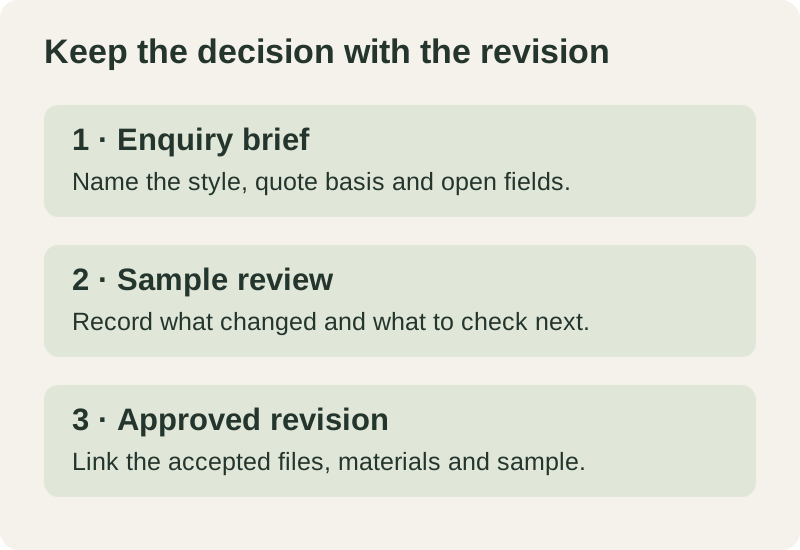
Imagine the buyer is reviewing a narrow self-fabric neck finish against a contrast binding. Give each option its own identifier and keep the approved body and sleeve references unchanged for that comparison. Record what the buyer will examine on each version, such as how the edge lies flat and whether the appearance changes after the agreed care procedure. If the supplier proposes a different body fabric at the same time, record it as a separate change; otherwise it is harder to tell which change affected the sample.
Once the choice is made, update the material list, construction note and artwork placement reference together if they are affected. Keep the previous version available for comparison, but name the accepted revision in the next enquiry or approval message. That gives the buyer a way to ask for a repeat of the same decision without treating an old email attachment as the controlling specification.
Download the worksheet and send a comparable enquiry
Download the editable T-shirt tech pack worksheet. The columns let you separate the value or reference, its status, the question for the supplier and the evidence you need back. Add your own drawings and artwork separately. For a comparison across suppliers, send the same starting version to each and ask them to identify substitutions and exclusions in writing. Keep the responses attached to the corresponding material and sample proposal.
A useful supplier response says what is priced and what is still conditional. Ask whether the quote uses the same body and contrast materials, includes the decoration trial and labels, and assumes a finished sample or further pattern work. Give quantities by style, colour and size rather than only a combined unit count. If two options are under review, keep separate quote lines so you can see the scope difference before looking at price. Use the garment quality-control checklist to plan what evidence should accompany approval.
Keep the pack useful when a request is still incomplete. For example, if the brief has artwork and a fit reference but no approved contrast sleeve material, ask for the cost basis on the proposed material and request a separate line for any alternative. Attach the colour reference rather than asking the supplier to match a screen image. If the order includes two colours, say whether each one must follow the same approved fabric and decoration route or can be reviewed separately. Record any item the supplier needs from your team and who will provide it. That makes the next action clear even if the supplier cannot yet confirm a final quotation.
If you are still choosing a silhouette, compare the visible development references on HACOLD’s women’s T-shirt manufacturing page. The page shows different fit and construction directions; quote the reference code that is closest and describe the changes you want rather than assuming the illustration is a stock product. Review the private-label manufacturing scope if you need to clarify pattern, labels or branding responsibilities before sending the pack.
Frequently asked questions
Can a simple T-shirt tech pack be used for a first quote?
Yes, if it identifies the intended garment, reference materials, quantity basis and the decisions still open. Ask the supplier to label assumptions and options so you can compare like with like. A provisional quotation does not approve a fabric, construction or schedule; those items should be confirmed in the project response.
Do I need a full graded size chart before contacting a manufacturer?
You can start with a named base size, fit reference and intended size range. Tell the supplier which finished measurements exist and which need development. Agree the base fit and measuring methods before relying on grading for approval, and define what evidence you want from a size set before bulk production.
Can a photograph replace the front and back flats?
Use it as a reference for the look, but specify the details the image cannot confirm. A front photo may not show the back seam, neckline finish or inside label position. Add simple flats and notes, and label any proposed details rather than letting them be treated as approved construction instructions.
What if I have the design but no fabric reference?
Describe the intended feel, structure or wearing context and identify which choices you want reviewed. Ask for named swatches and a response that separates suggestions from confirmed supply. Compare the candidates with the sleeve, neck and decoration requirements together, then tie any accepted choice to a revision of your tech pack.
Next step
Use HC-S01 to brief your T-shirt project
Open the women’s T-shirt style gallery and select HC-S01. Choose Prepare an RFQ for this style to open the enquiry form with the style reference selected.
Find HC-S01 in the style gallery