Style HC-S24
What Does Yarn Dyed Mean? Sourcing Striped Polo Fabric
Yarn-dyed fabric is made from yarn colored before knitting or weaving. Use the HC-S24 Polo to specify a three-color stripe, compare two fabric routes and track the approved shade lots.
A uses yarn-dyed knit stripes. B prints the same stripe design. In the worked example, a mark on B’s ivory band needs review. A advances to a sewn sample.
In this guide
- What Does Yarn Dyed Mean?
- HC-S24 Worked Example and Blank Fabric Approval Worksheet
- How to Brief a Supplier on a Three-Color Stripe
- Compare Yarn-Dyed and Printed Stripe Swatches Before and After Care
- Approve Shades and Keep Track of Production Lots
- Compare Supplier Quotes and Sign Off the Fabric
- Frequently Asked Questions
- Develop a Striped Polo With HACOLD
What Does Yarn Dyed Mean?
Yarn-dyed fabric uses yarn colored before the fabric is knitted or woven. For a striped knit, the maker can arrange yarns of different colors in a sequence to form the bands as the fabric is knitted. Piece dyeing adds color to fabric after it is formed. Printing applies a design to a fabric surface. A supplier can piece dye a base and print a pattern on it in separate steps. Ask which stages create the color you see and record them on the specification. National Cotton Council dyeing and printing guide
| Route | Where color is applied | Ask the supplier for |
|---|---|---|
| Yarn dyed | Yarn before fabric formation. The colored yarn arrangement can create the stripes. | Shade references for each yarn color and a finished knitted swatch showing the full repeat. |
| Piece dyed | Formed fabric, for example to make a solid base. | Base article, dyed shade sample and any further steps that create a pattern. |
| Printed | A pattern is applied to the fabric after formation. | A print strike-off on the intended fabric and finish, with the full pattern and order of colors. |
Turn the swatch over and observe how the design appears on both sides. The reverse can help you frame a question about yarns, print coverage or knit construction. Confirm the route on the supplier’s article sheet and check that the sample matches it. A coloration label describes a manufacturing step. The buyer needs separate evidence when approving shade, washing performance or intended feel.
When two offers both say “striped knit,” ask each supplier what it is quoting. A stock stripe may come with a fixed repeat and color sequence. A custom stripe may start with an approved drawing and separate shade submissions. Ask which parts of the design are fixed, which can change and what the supplier can submit for review. That gives the buyer a way to compare an available stock fabric with a proposed custom version of the same design.
HC-S24 Worked Example and Blank Fabric Approval Worksheet
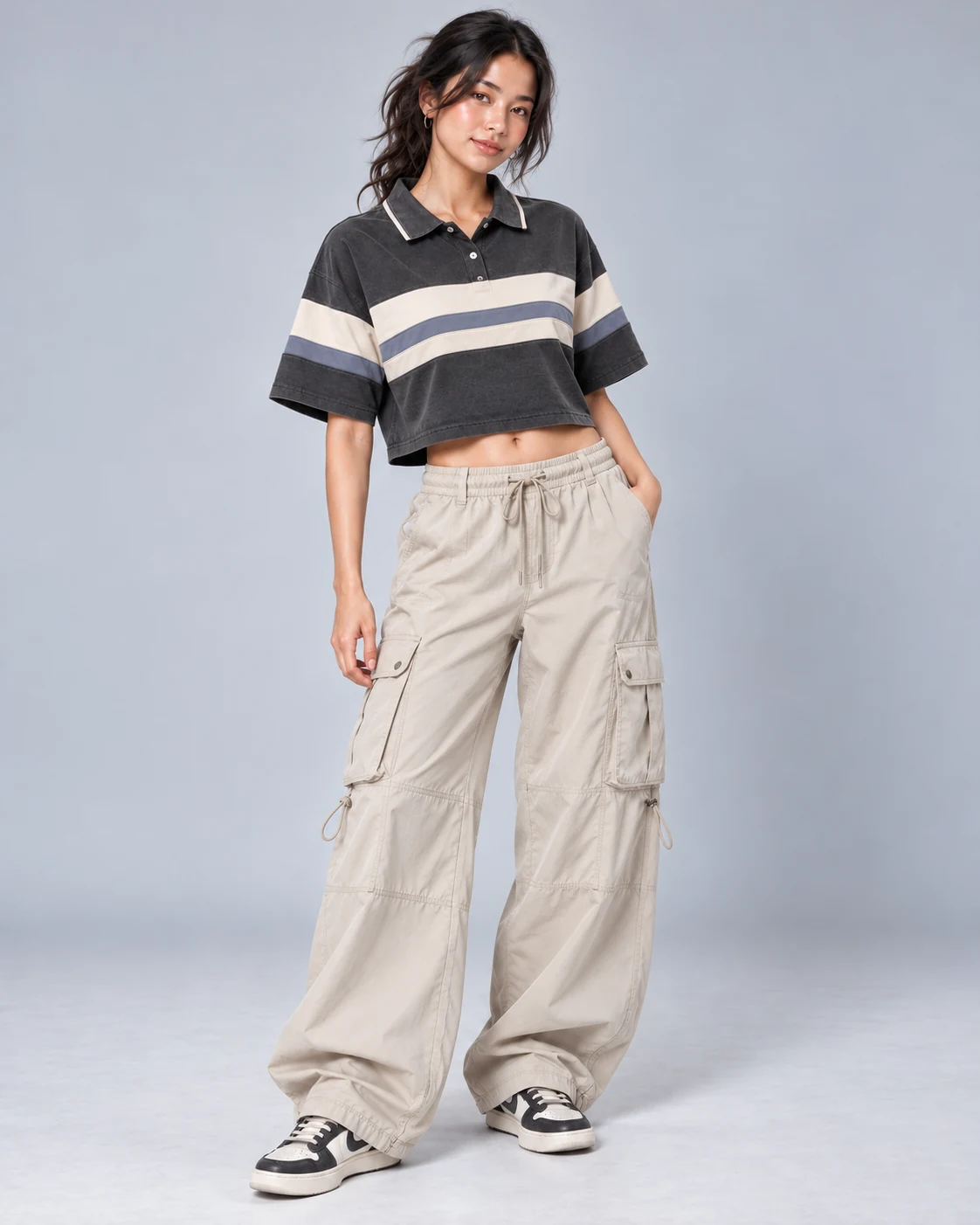
HC-S24 is a charcoal box Polo concept with ivory and steel-blue bands. The illustrated brief asks for two versions of the same stripe design. A uses a yarn-dyed knit and B uses a print on a proposed knit base. Compare both as finished fabrics. The repeat dimensions, swatch IDs and results below show how a buyer can document the decision on an actual project.
| Record | Filled example | Decision |
|---|---|---|
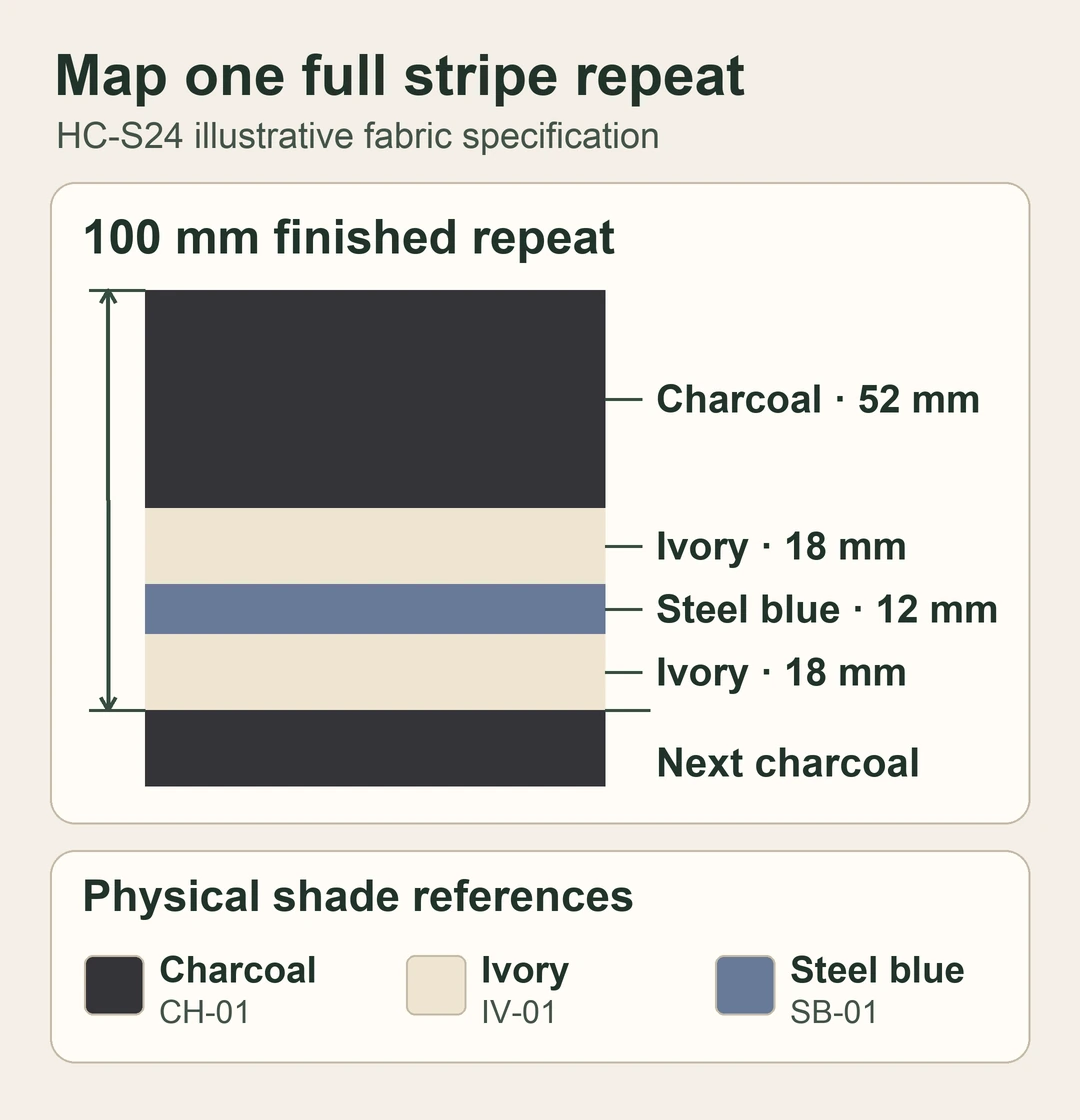
| Finished repeat | 100 mm total. Charcoal 52 mm, ivory 18 mm, steel blue 12 mm, ivory 18 mm. | Confirm the same finished order and widths on both swatches. |
| Shade references | CH-01, IV-01 and SB-01 on the buyer’s physical color card. | Retain one full repeat beside the three separate color standards. |
| A/B care check | A shows no visible mark in the marked ivory area. B shows a blue-gray mark after the agreed wash. | Advance A to the Polo sample. Hold B for investigation. Keep bulk approval open. |
| Quote and lot sign-off | Quote both routes on finished usable width. Record A’s swatch ID and compare the first bulk cutting against it. | Confirm lot coverage and garment-stage checks before release. |
Use Fabric specification and quote to send the finished design and compare supplier offers. Record the two options in A-B swatch and care checks. Use Shade lots and approval to link each color reference and bulk submission to its decision. The workbook starts with blank entry fields.
Download the blank yarn-dyed fabric approval Excel template
How to Brief a Supplier on a Three-Color Stripe
Specify the Full Finished Repeat
Draw the band sequence from an unmistakable start point to the same point in the next cycle. On the example this means starting at the leading edge of charcoal and measuring to the next charcoal edge. Include both ivory bands on the drawing. A supplier may otherwise interpret the repeated color as one band. Mark the fabric direction and record whether dimensions refer to finished fabric measured at rest or to another agreed condition.
Request a cutting large enough to show the full repeat, a little of the next one and the fabric face and reverse. Ask for weight and usable width in the finished state. If the width differs between options, confirm the usable portion on the quote rather than comparing the outer roll dimensions. Use the Rugby sampling guide for deciding where the approved bands must align on the sewn garment.
State whether the repeat runs across or along the roll and mark the direction you expect to appear on the front panel. Ask for a photo of the cutting with those directions labeled. When a supplier offers a slightly different stripe sequence, compare the actual bands in order and decide which change affects the design. A total repeat that matches the drawing can still conceal a wider steel-blue band or a narrower ivory band.
Request the Right Physical Sample
For A, ask the supplier to identify the dyed yarn references and provide a finished knitted swatch. Compare the full stripe beside the individual shades. A yarn card shows the individual color. A knit swatch shows how that color reads alongside the other bands and after finishing. For B, request a print strike-off, meaning a printed trial on the proposed base fabric. Label the base article, finish and print revision so a later bulk submission can be checked against the right trial.
Record construction, fiber content, weight, finish and stretch information if relevant to fit. Confirm whether surface texture affects the stripe edge or how the ivory reads next to steel blue. If the supplier can match the print on a different knit, ask it to list the difference and preserve a separate swatch reference. The Polo fabric comparison explains how to evaluate piqué and jersey on the same purchase brief.
Ask the supplier to say whether the cutting has already received the proposed bulk finish. If a trial was submitted before finishing, use it to discuss the design and identify what the next specimen must confirm. Set aside a finished cutting for visual approval and keep its label attached. This lets another reviewer distinguish a swatch that settled the color order from the one that establishes the shade and hand feel target for production.
Compare Yarn-Dyed and Printed Stripe Swatches Before and After Care
Set the same finished stripe target, review lighting and care conditions for both routes. Ask the supplier to match construction, finished weight and hand feel where feasible. If the two bases or finishes differ, log exactly how they differ and interpret the samples as two complete options. Check face and reverse. Photograph the entire repeat, then record the width and edge of each band at a marked station. Keep the unwashed reference alongside the test swatch.
Choose the same comparison area on both cuttings before washing. For HC-S24, one useful area includes the steel-blue boundary and both ivory bands. Mark a second station away from the edge if there is enough fabric. Photograph the original orientation so you can find both stations again. Ask the reviewer to record where a change occurred and whether it spans the full width. A small local mark and a change across the whole band can lead to different follow-up checks.
Agree on wash conditions, cycle count, drying and when to remeasure the fabric. After care, record repeat change separately from shade change. Compare the ivory bands to their pre-care images and retained references. If a mark appears, note where it is, whether it crosses the color boundary and which swatch and care stage it belongs to. Keep notes on the darker color’s own change separate from any mark on the pale band.

If the buyer requires formal laundering colorfastness evidence, ask the lab which method and specimen match the project. AATCC TM61 is an accelerated laundering colorfastness method. Agree which results the lab should report and how they will be evaluated. Keep the report ID with the specimen record and log in-house appearance observations separately. Where rub transfer is suspected, use the crocking guide to identify the separate question and evidence needed. AATCC TM61 public scope
Use the combined results to plan the next sample. A swatch can look convincing on a table and still feel different when it becomes a boxy Polo. On the sewn sample, check how the fabric hangs and whether the intended band height reads correctly across the chest and sleeves. If the swatch advances but another check remains open, name that decision and next owner so the fabric approval is easy to interpret.
Use the buyer’s intended care conditions when asking for the sewn sample review. Include the collar and other contrast materials that may contact the body during washing. If a finished garment shows a mark on the ivory, attach the correct garment and fabric IDs before discussing the cause. The earlier swatch comparison gives you a reference point. Checking the whole garment gives the team the opportunity to consider the other materials used in assembly.
Approve Shades and Keep Track of Production Lots
Keep a master swatch with the full approved repeat and the physical standards for charcoal, ivory and steel blue. Label the swatch with its article, lot, finish and decision date. Review the shades separately and together under agreed lighting. A shift in the charcoal can change how the ivory appears beside it, even when the ivory is close to its reference. AATCC EP9 provides a procedure for formal visual assessment against a standard. AATCC EP9 public scope
For a bulk submission, ask which yarn dye lots or print batch fed the finished fabric and link them to the roll or cutting IDs. Include the knitted or printed article and finished state. Decide which lots a particular approval covers. If two rolls match the separate shades but differ in stripe width or hand feel, document which observation held the decision and request the missing evidence before release.
If submitted cuttings come from more than one bulk lot, label them separately and ask the supplier to identify which production rolls each cutting represents. Use the same orientation and lighting when they are set beside the master. Record which colors and repeat checkpoints were accepted for each lot. If the approval applies only to part of the submission, write the scope into the decision so the purchasing and inspection teams can find it later.
Treat a reorder as a comparison against the retained reference. Ask whether the supplier changed a yarn source, base fabric, print process or finish since the last approval. Identify the new lot and compare the same full repeat, shade target and care state. Agree what triggers a new submission so a purchasing change reaches the buyer with the right swatch or report.
Compare Supplier Quotes and Sign Off the Fabric
Send both suppliers one target repeat drawing, physical color references and the intended order breakdown. Ask for a price with its currency and unit, for example per linear meter of finished usable width. Request the quoted usable width, proposed construction, finish and any differences from the brief. List sample charges and production setup charges separately. Ask whether minimums apply by dyed yarn color, printed article or total fabric order, and record the unit used.
Compare each quote against the planned cutting assumptions. A different usable width or stripe repeat may alter how patterns fit across the fabric. Ask whether the quote assumes any reserve for matching the stripes or using only part of a roll. Keep the supplier’s fabric IDs and lot references on the offer so a later substitution can be checked against the material you approved. The product development and sampling process describes the move into the next sample stage.
When comparing a stock option and a custom option, ask how much fabric is included at the quoted width and which samples the supplier will provide. List charges for developing the shade, knitting the repeat or preparing a print trial on their own lines. If the supplier quotes a garment price, ask which fabric and matching assumption the price uses. The same quote comparison can then be revisited if the design or quantity changes.
Record the chosen route, approved fabric and retained sample before treating the quote as the approved version. Attach the care observations, any lab report, the review date and the person responsible for remaining checks. Mark whether the decision authorizes another swatch, a sewn sample or release of the documented fabric lot. That distinction lets the sourcing team progress a promising fabric while the garment’s fit or performance is still under review.
Frequently Asked Questions
What Is the Difference Between Yarn-Dyed and Piece-Dyed Fabric?
The yarn-dyed route applies color before making the fabric. Piece dyeing colors fabric after formation. For a finished textile with a stripe, ask which operation creates the pattern, since a piece-dyed ground can also be printed later. Keep the manufacturing route and the physical sample reference together on the quote.
Can I Identify a Yarn-Dyed Stripe From the Reverse Side?
The reverse may help you see how a color is distributed, but its appearance depends on construction and coloration. Ask for a labeled cutting and confirmation of how the stripe was made. Check the face and reverse on a full repeat, then match the cutting to the supplier’s article and finish.
Does a Yarn-Dyed Label Tell Me How the Stripe Will Wash?
The label tells you when color was applied. Use before-and-after checks on the exact fabric and finish to assess appearance. Record shade change and any marking of adjacent ivory separately. When the order calls for formal evidence, agree on an applicable method, specimen and acceptance criteria with the lab.
Which Samples Should I Request Before Approving a Reorder?
Ask for a finished lot cutting showing the full repeat, the new material and lot identifiers, and any changed shade or finish reference. Compare it with your retained master under the agreed conditions. If the supplier changed a material or process, agree which care or garment checks should be repeated.
Develop a Striped Polo With HACOLD
Send your stripe repeat, color standards, swatch photos and planned quantities with the brief. Include the dimension or care question you want the first sample to settle. Open the Polo development gallery, select HC-S24, and choose Prepare an RFQ for this style. The HC-S24 inquiry carries the style reference into the form. The style panel also offers email and WhatsApp contact for the same concept.