Style HC-S15
Denim Weight Guide for Wide-Leg Cargo Jeans
Denim weight is the mass of a given area of fabric. When a denim supplier quotes 12 oz, it normally means 12 ounces per square yard, or about 407 grams per square meter. For wide-leg cargo jeans, use that number to shortlist swatches, then compare how the finished legs hang and what happens where pocket, side seam and knee layers meet. Ask the supplier to identify the production stage represented by each quoted weight.
Compare finished-yardage candidates at 10 oz/yd² (339 GSM) and 12 oz/yd² (407 GSM).

In this guide
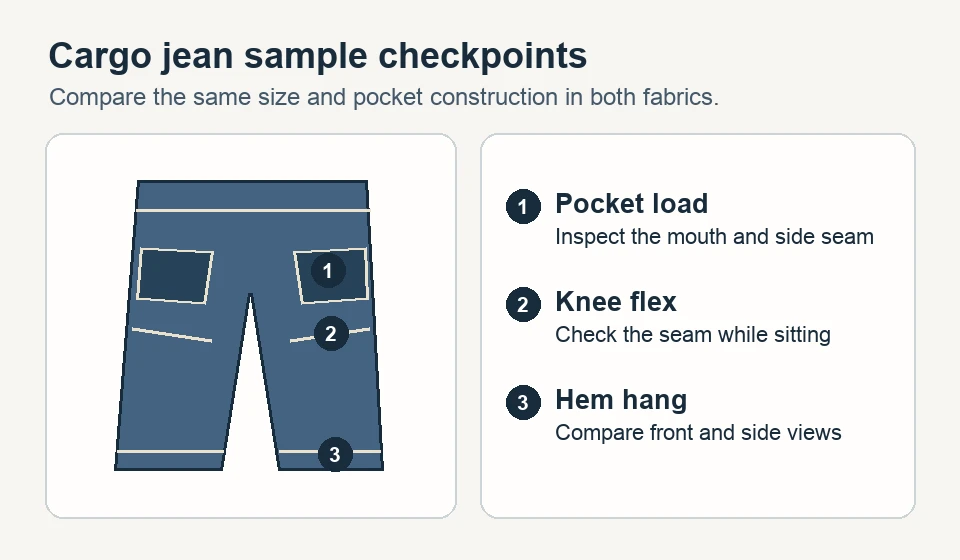
HC-S15 is a wide-leg washed indigo concept with cargo pockets and articulated knee panels. A useful first comparison would put 10 oz and 12 oz candidate denims through the same defined sample steps. The design image sets the silhouette and visible details. Material measurements and wash behavior come from supplier documentation and physical sampling.
Denim Weight in Ounces and GSM
The denim manufacturing bulletin from Cotton Incorporated describes the weight per square yard used to describe denim. Denim manufacturing bulletin (PDF)

Multiply oz/yd² by 33.906 to get approximate GSM. Divide GSM by 33.906 to get oz/yd². Round according to the precision of the source reading. For example, a nominal 10 oz fabric is roughly 339 GSM. The same figure in both units describes the fabric’s mass per area. Yarn, weave, finish and any stretch affect how a piece of denim feels and moves. Candiani guide to denim weight
| Nominal fabric weight | Approximate GSM | What to inspect on a cargo jean sample |
|---|---|---|
| 8 oz/yd² | 271 | Hem hang, coverage and whether the pocket face collapses during wear |
| 10 oz/yd² | 339 | Leg drape and how the loaded pocket pulls at the side seam |
| 12 oz/yd² | 407 | Knee bend, seam intersection thickness and pocket flap closure |
| 14 oz/yd² | 475 | Flex at the knee and whether folded hems and topstitched corners work with the design |
The table gives comparison points. Fabric categories such as lightweight, midweight and heavyweight can vary across sellers. Use the supplier’s actual range and the intended end use when deciding what to sample. As a practical first screen, handle candidates in the same direction and at the same size. A larger swatch shows bending and drape more clearly than a small one attached to a card.
Check which stage the mill is quoting
Ask whether a quoted weight refers to greige denim, finished yardage before cutting, or a different condition. If the supplier lists a nominal figure, ask what range and testing condition it represents. Compare finished yardage on the same stated basis when you can. Record separately any measurements taken from a washed garment or a wash trial. A wash can change both mass and dimensions. Mixing pre-finishing and post-finishing figures makes it harder to explain the difference between two samples.
Weight per square yard also differs from weight per linear yard. The latter depends on the fabric width. Ask for the unit and usable width in the quote, especially if competing suppliers use different units or price bases. The fabric weight and GSM guide covers unit comparisons across clothing materials.
HC-S15 Example: A 10 oz vs. 12 oz Denim Trial
The example below shows what to record before choosing a material. It uses two illustrative nominal finished-yardage weights. Replace the fabric codes, widths, quotes and measurements with the supplier’s actual data.
| Comparison point | Sample A | Sample B |
|---|---|---|
| Nominal finished yardage | 10 oz/yd², approximately 339 GSM | 12 oz/yd², approximately 407 GSM |
| Material record | Enter mill code, lot, finish and usable width | Enter the same fields and flag differences in weave, composition or stretch |
| Sewn construction | Same size and pattern. Use the same pocket, knee and hem details. | Keep the pattern and details. document any sewing changes needed for the fabric |
| After production wash | Record process reference, shade sample and measured dimensions | Match the target appearance and document any recipe difference |
| Decision needed | Does the loaded pocket keep its position? Does the leg keep the intended line? | Do the knee seams and pocket folds still allow the required movement? |
Start with both fabrics under the same viewing conditions. Fold each swatch across the same direction and compare the edge to see how the material turns. Mark each candidate and retain an unwashed reference. Use the same style, size and pocket construction for the garments if those details are relevant to the decision. Where the fabric options differ in stretch, finish or fiber content, record those differences with the weight. The trial then compares two complete fabric options with their respective characteristics.
Agree on the order of evaluation
Ask for a sewn knee and pocket trial first if the team has an open construction decision. This can show how many layers stack at the seam, especially where the pocket edge folds over a panel. The complete garment will still be necessary to examine full leg hang, pocket load and movement as a system. Review the fabric options in the same sequence so the team can trace changes from swatch to trial assembly to full sample. Where possible, keep the same lighting and camera distance across the two versions.
Set up the quote comparison using both suppliers’ actual units before looking at totals. A price per linear yard covers a different area when the usable widths differ. Ask for a cutting estimate for the agreed size mix and the same revision. Review whether the proposed wash or orientation creates any additional cutting constraints. Keeping those details next to the fabric code lets the buyer trace a cost difference back to the actual material and process being offered.
What Changes on a Wide-Leg Cargo Pattern?
Leg hang and the weight of pockets
A wide leg gives the fabric more area to hang between the hip and hem. Stand both garments on the same fit model, or use the same form and support point. Look at the front, side and back with the pockets empty. Then place an agreed test item in the pocket and compare how the pocket mouth and side seam move. A pocket can pull the outer leg forward or create a local dip even when the base fabric looks balanced on its own.
Record whether the design calls for a closer fold or a fuller gusset. If the leg line moves under load, examine the pocket position and support before changing to a heavier denim. More material at a gusset or flap can add bulk in a specific area. For a separate check of pocket seam design and trial stitching, use the cargo pants fabric and pocket sampling guide.
Knee curvature and the seam stack
An articulated knee is shaped with a seam, dart or panel arrangement. On HC-S15, use the knee panel drawing and style reference to agree where the shaping should sit. Have the wearer step up, sit and bend to the extent the style requires. Record whether the fabric creases where expected, whether the seam presses into the knee and whether the lower leg falls back into line afterward. Repeat the movements with each fabric using the same sample size.
A stack of denim, pocket fabric and seam allowances can be thicker than the weight of the outer denim suggests. Compare the trial seam from the face and reverse. Check whether the stacked edges push the topstitching out of position or interrupt the washed appearance. Ask the supplier how the layers will be folded and pressed, especially where the panel intersects the side seam. If either option needs a different construction, ask for a revised sample and quote.
Rise, hem and proportion across sizes
Record the rise, knee position, leg opening, inseam and outseam at the agreed points. Use the same measuring diagram on both garments. A change in measured outseam can affect the intended shoe clearance and the relationship between the knee and pocket. Once the first size is stable, check the fit points where grading could move the cargo pocket or knee articulation away from its intended location. The cargo pants tech pack guide helps put those points on the measurement drawing.
Compare the Production Wash and the Care Result
First ask what wash or finish was used to achieve the sample’s appearance. Request the process reference, the fabric lot and the resulting shade reference. Take matched photos around the hem, seams, pocket flap and knee panel. If the legs or pocket panels show a shade difference, record where it occurs and whether the difference repeats between garments. Decide which areas need shade consistency and which variation the brand will accept.
Production wash establishes a delivered appearance. A separate care trial shows what happens after the garment is handled according to the intended care procedure. Use the approved production-wash sample as the starting point for that trial. Record the agreed care settings and any drying or conditioning. Take the before-and-after measurements at the same reference points. Pay particular attention to hem length, knee position, leg twist, pocket edges and any further shade or color transfer. For a formal garment dimensional-change result, specify the agreed method with the testing provider. AATCC TM150 garment dimensional change
Keep a physical approval reference
A phone photo is a practical way to share the first result. An approved physical reference helps the next reviewer check wash tone, feel and edge effect. Label it with the style, sample revision, fabric and wash lot or reference. Record any open issues that need another sample. If the fabric or wash is later substituted, give the new sample a separate record. Retain the approved material and a representative garment for the next comparison when feasible.
What to Request Before Comparing Bulk Quotes
Send the same drawings, size range and order assumptions to each supplier. Ask them to confirm the stated fabric weight, the condition at which it was measured, composition, usable width and proposed wash. Have them price against an identified fabric and finish. Two quoted fabrics can have similar weights and different widths, cutting efficiency or seam requirements.
| Quote field | Why the buyer needs it |
|---|---|
| Mill and fabric reference, weight, average or nominal basis, usable width | Keeps the material specification traceable and gives the team a basis for costing |
| Sample revision and drawings referenced | Confirms the same knee, hem and pocket construction has been priced |
| Production wash reference and approved shade range | Gives both parties an agreed target for the appearance |
| Itemized sampling and any special sewing or wash charges | Makes the assumptions behind the quote visible |
| Alternate fabric and proposed checks | Shows what must be reviewed if supply or costing changes |
Give the supplier a few decisions that the first sample should resolve. A typical example would be leg drape with a loaded pocket, knee comfort and whether the wash can retain the intended leg length. If a quote excludes an extra wash trial or changes a pocket detail, record that separately before comparing totals. Use the product development and sampling overview to plan how the fabric trial, fit sample and approval fit together.
Download the blank Excel template
Frequently Asked Questions
What does 12 oz denim mean?
It usually means that a square yard of the fabric weighs about 12 ounces, which is about 407 GSM. Confirm the unit and the material stage with the supplier. To compare it with another quote, use the same area unit and compare fabric weights measured in the same condition.
Is heavier denim always stiffer?
Weight is one variable. Yarn, fabric construction, composition, finishing and washing affect bending and hand. Compare equal-size swatches and sewn samples with the same construction. Check the behavior in the locations that matter to the fit, such as a folded hem or the point where a knee seam meets the side seam.
What denim weight works for wide-leg cargo jeans?
Begin with candidates that fit the intended season, drape and pocket structure. A 10 oz and 12 oz trial can be a useful example when both materials suit the design. Check the hanging leg, pocket load and knee flex on the finished garment before committing to a bulk material.
Why does denim weight change after finishing or washing?
The fabric can change in both mass and area. The results depend on the starting fabric and the process. Ask whether a quoted figure describes untreated yardage, finished yardage or a washed material. Keep each reading alongside the stage, unit and condition in which it was taken.
Develop Wide-Leg Cargo Jeans With HACOLD
Open the women’s trousers development page, choose HC-S15 Washed denim cargo trousers, and continue from the selected style to the inquiry form. Share the target silhouette and wash, an intended measurement range, and any fabric weight or pocket construction preferences. If the fabric is undecided, include the questions that a two-fabric trial should answer.